



I build AI systems that hold up under enterprise scrutiny — retrieval pipelines whose answers trace back to a source passage, and multi-agent workflows that pause for a human before they commit.
Computer Engineering at Thapar Institute of Engineering & Technology. Over a six-month AI engineering internship at Ernst & Young (Technology Consulting, CNS — Technology Strategy & Transformation), I went from validating someone else's enterprise AI system to designing and building three of my own.
One standard runs through all of it: an AI output is not correct because it is plausible. It is correct because it is verifiable against a source, consistent across repeated runs, and fails safely to a human rather than quietly producing something wrong.
| Retrieval-Augmented Generation | Lexical, semantic and hybrid retrieval; rank fusion; citation-backed generation |
| Multi-Agent Systems | Sequential orchestration, shared project memory, human approval gates |
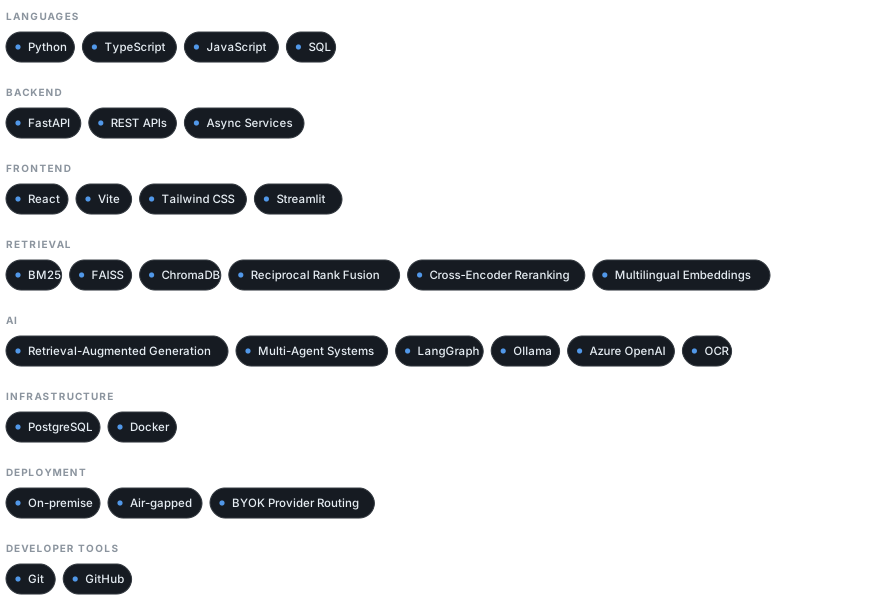
| Backend Engineering | Async FastAPI services, REST API design, PostgreSQL, caching, on-premise deployment |
| Software Architecture | Layered design, offline-first and air-gapped constraints, auditability by construction |
Four projects. Each one was motivated by the outcome of the one before it.
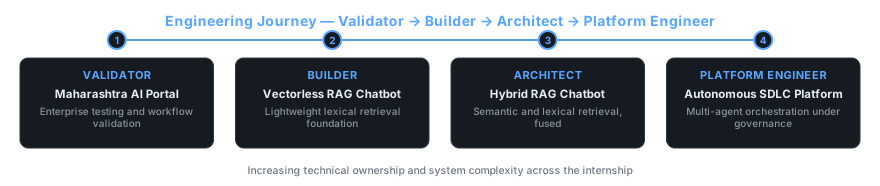
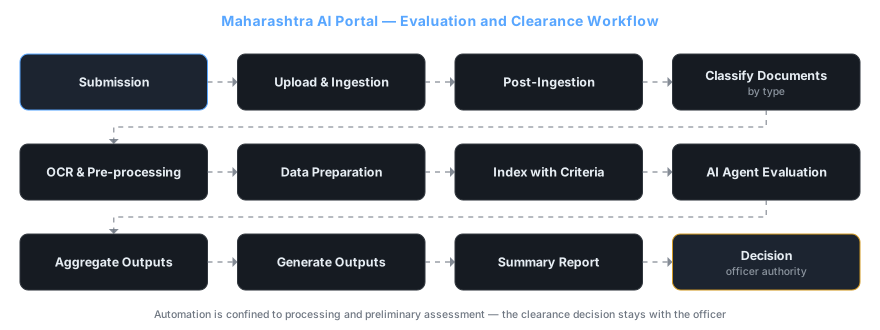
Validator → validated a live government AI portal, and learned what "correct" has to mean in an enterprise setting. Builder → applied that standard to a system of my own, starting at the simplest retrieval architecture that could work. Architect → measured where that baseline broke and redesigned its retrieval to fix exactly those failures. Platform Engineer → generalised the pattern from answering questions about documents to generating the documents themselves.
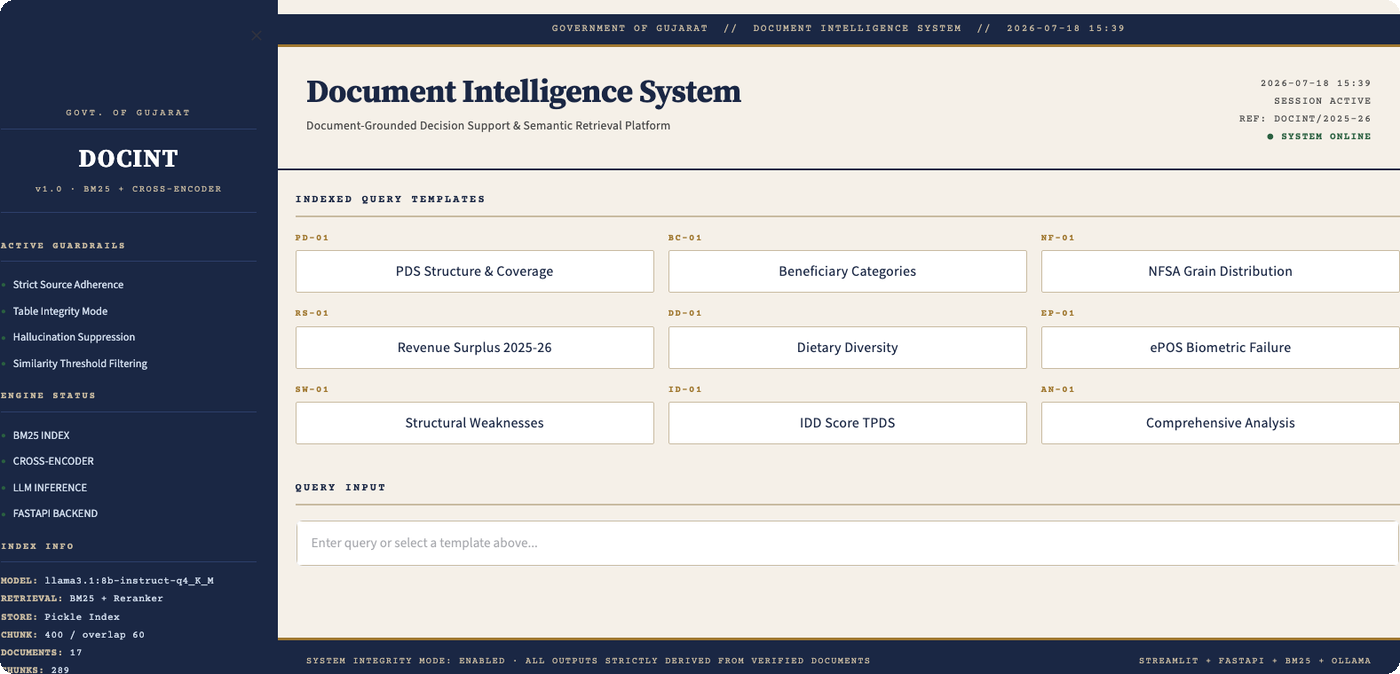
Document intelligence with no vector database — BM25 lexical retrieval and a locally hosted LLM.
Problem. Government departments hold large policy repositories that keyword tools can match on text but not on meaning. An officer answering one question may search the whole repository by hand — slow, inconsistent between reviewers, and impossible to audit, because a manual answer carries no trace back to the passage that justified it.
Why not a vector database. The conventional answer is embeddings plus a vector store. For air-gapped government deployments that means embedding infrastructure, index maintenance and recurring cost. This project tested whether that burden was necessary before proving it necessary — starting at the keyword-only end of the spectrum on purpose.
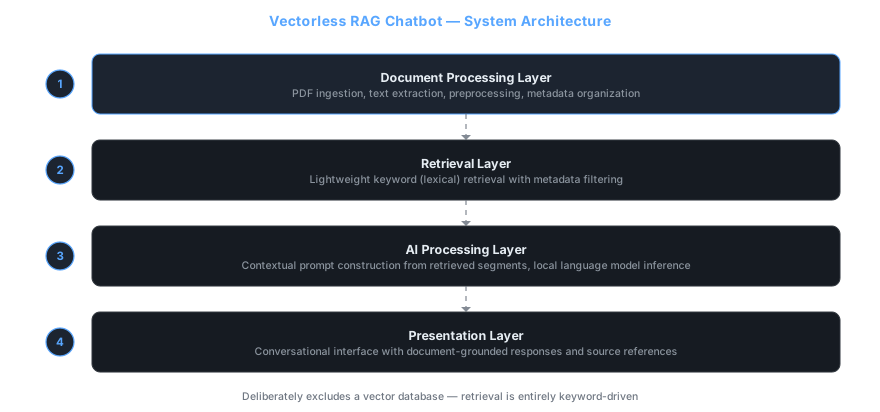
Key decisions. Structure ingestion to preserve traceability from answer to source passage from the outset, rather than retrofitting citations later. Constrain the prompt so responses are generated strictly from retrieved content, not model knowledge. Rerank with a cross-encoder so lexical recall is traded back for precision before context is assembled.
Technology — Python · FastAPI · BM25 · Cross-Encoder Reranking · Ollama · Streamlit · Tesseract OCR
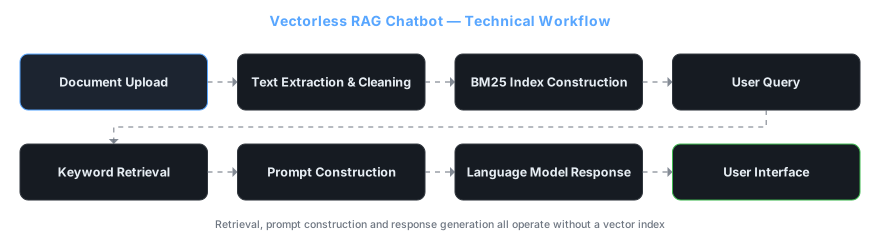
Retrieval pipeline
Outcome. It worked — and its limits are the point. Retrieval degraded exactly where keyword matching has no notion of meaning: paraphrased queries, indirect references, non-English content. That finding motivated the next system.
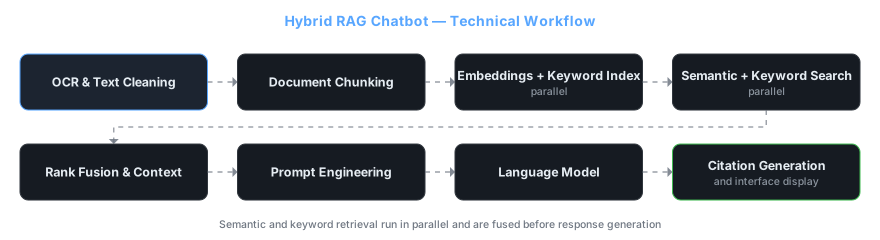
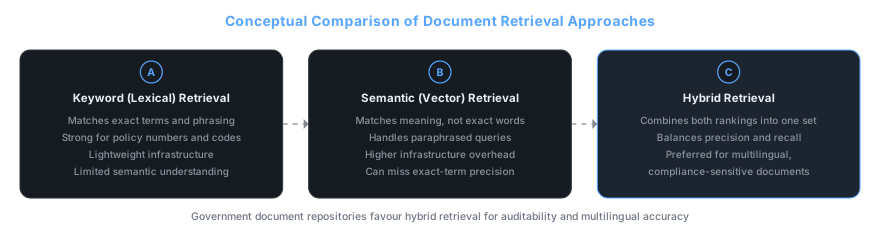
Semantic and lexical retrieval run in parallel and fuse into one ranking.
Problem. The three failure modes measured in the vectorless baseline, in a corpus that also contains scanned pages with no machine-readable text layer and terminology in more than one language.
Why not just switch to vector search. Keyword retrieval is precise on policy numbers and regulation codes; vector retrieval handles paraphrase and crosses languages but can under-rank an exact-but-non-obvious match. Choosing either means accepting the other's weakness. Fusing both rankings — rather than replacing one with the other — was driven by an observed failure pattern in a working system, not a generic preference for more advanced retrieval.
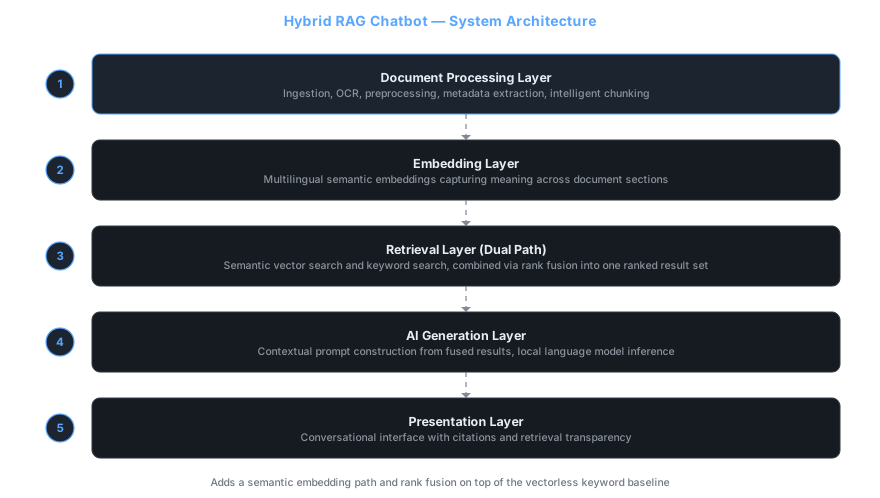
Key decisions. Treat semantic and keyword retrieval as complementary signals and merge them with Reciprocal Rank Fusion. Make citation generation a first-class pipeline output rather than an afterthought. Use multilingual embeddings so one index serves cross-lingual search instead of one store per language. Keep inference on-premise so document content never leaves the host.
Technology — Python · FastAPI · FAISS · ChromaDB · BM25 · Reciprocal Rank Fusion · Multilingual Embeddings · React · Ollama · OCR
Retrieval pipeline
Outcome. Better semantic understanding, more consistent multilingual handling, and explainability through citations — a grounding-plus-transparency design now proven across two independent systems. That consolidated pattern became the foundation for the platform below.
Nine specialised AI agents turn a business requirement into engineering artifacts, gated by mandatory human approval.
Problem. Enterprise delivery depends on a sequence of specialists — business analysts, architects, database designers, security reviewers — each producing documentation that must stay consistent with everyone else's. Coordinating that manually produces incomplete requirements at initiation, architecture quality that varies with individual experience, artifacts that drift out of consistency, and slow knowledge transfer.
Why not a single assistant. Language models draft structured technical content competently, but are typically deployed as isolated assistants rather than coordinated collaborators. An assistant answering one prompt at a time cannot hold a project's context across disciplines — which is precisely where the inconsistency comes from.
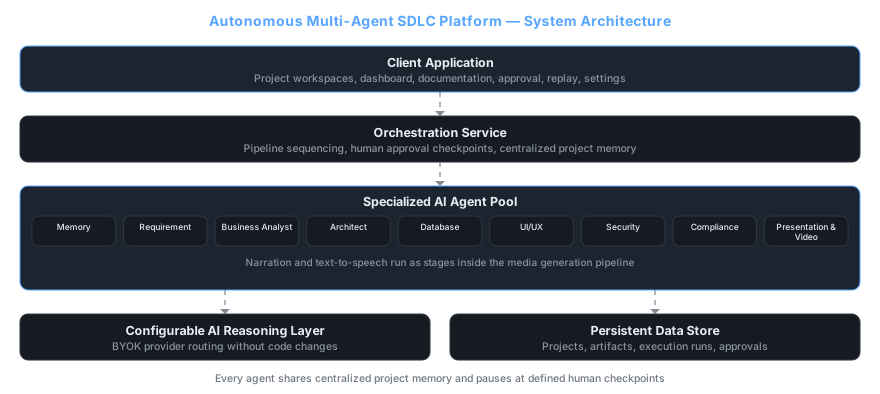
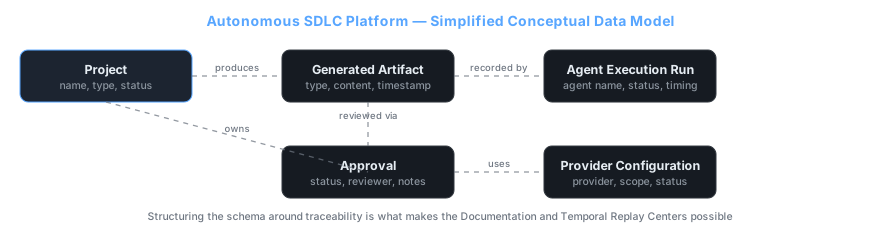
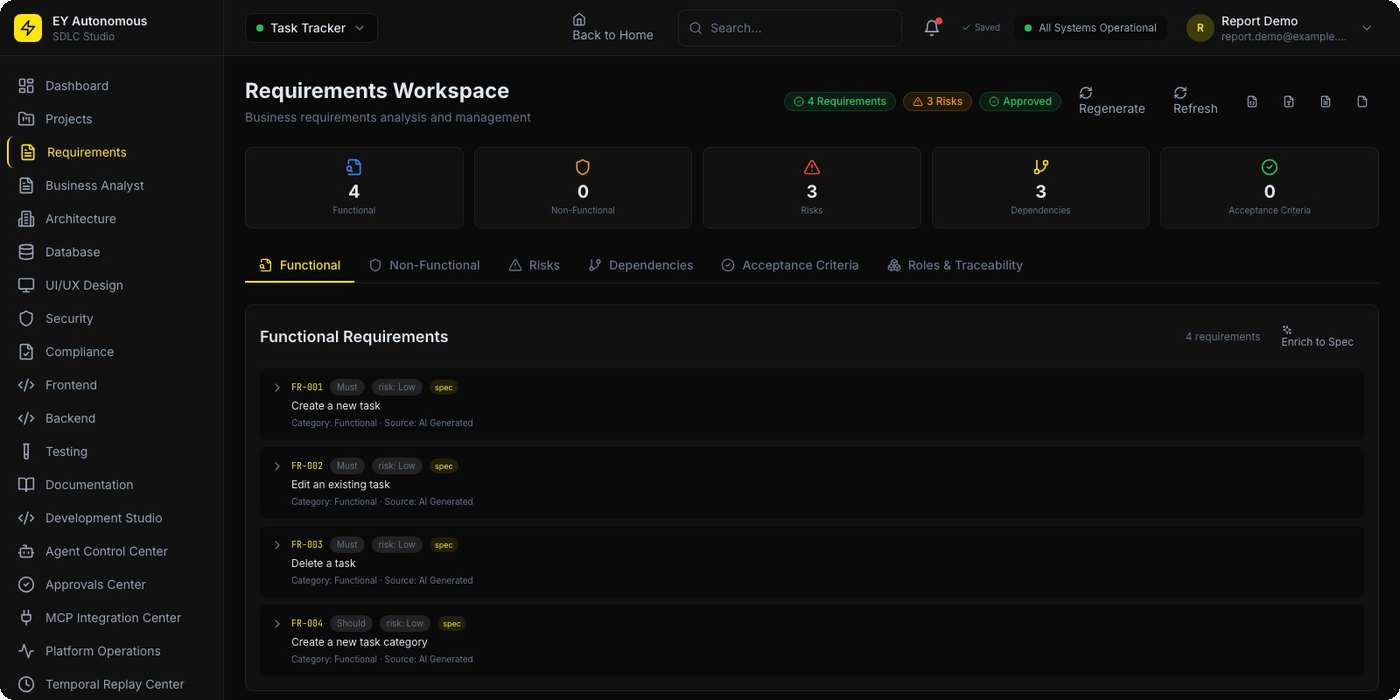
Key decisions. Centralise project memory in a Memory Agent so each agent reads shared context instead of re-deriving requirements — this is what prevents cross-artifact drift. Require explicit human sign-off at two checkpoints before output influences the next stage. Structure the schema around traceability first, which is what makes the Documentation and Temporal Replay Centers possible at all. Keep the reasoning layer configurable so a project can supply its own provider credentials.
Technology — Python · TypeScript · FastAPI · React · PostgreSQL · LangGraph · Multi-Agent Orchestration · BYOK Provider Routing
Agent pipeline — two mandatory human approval checkpoints
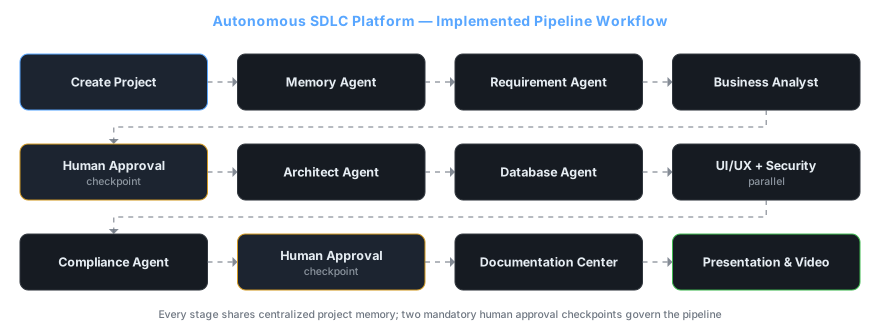
Outcome. A coordinated agent set producing consistent requirements, business analysis, architecture, database design, UI/UX and compliance artifacts — governed by approval checkpoints and kept auditable by the Documentation and Temporal Replay Centers.
Supporting designs that span the projects above.
Retrieval trade-off — the comparison that drove the hybrid redesign
Data model — traceability designed in from the schema up
BYOK provider resolution — graceful degradation across AI providers

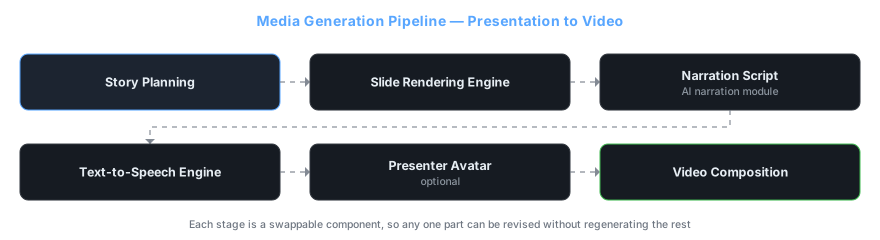
Media generation pipeline — artifacts to narrated presentation
Maharashtra AI Portal — the twelve-stage clearance workflow I validated
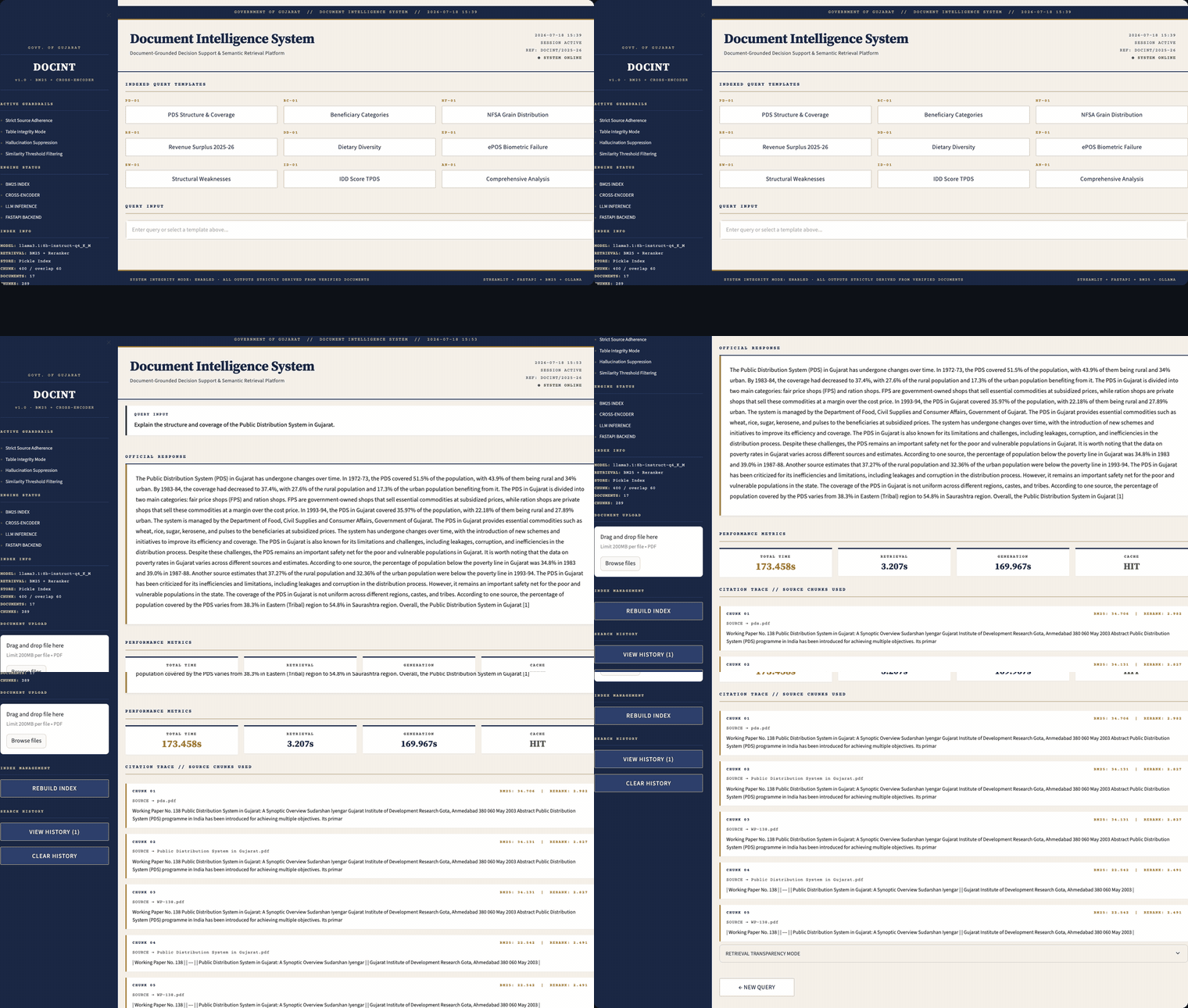
Interface stills — full resolution
 |
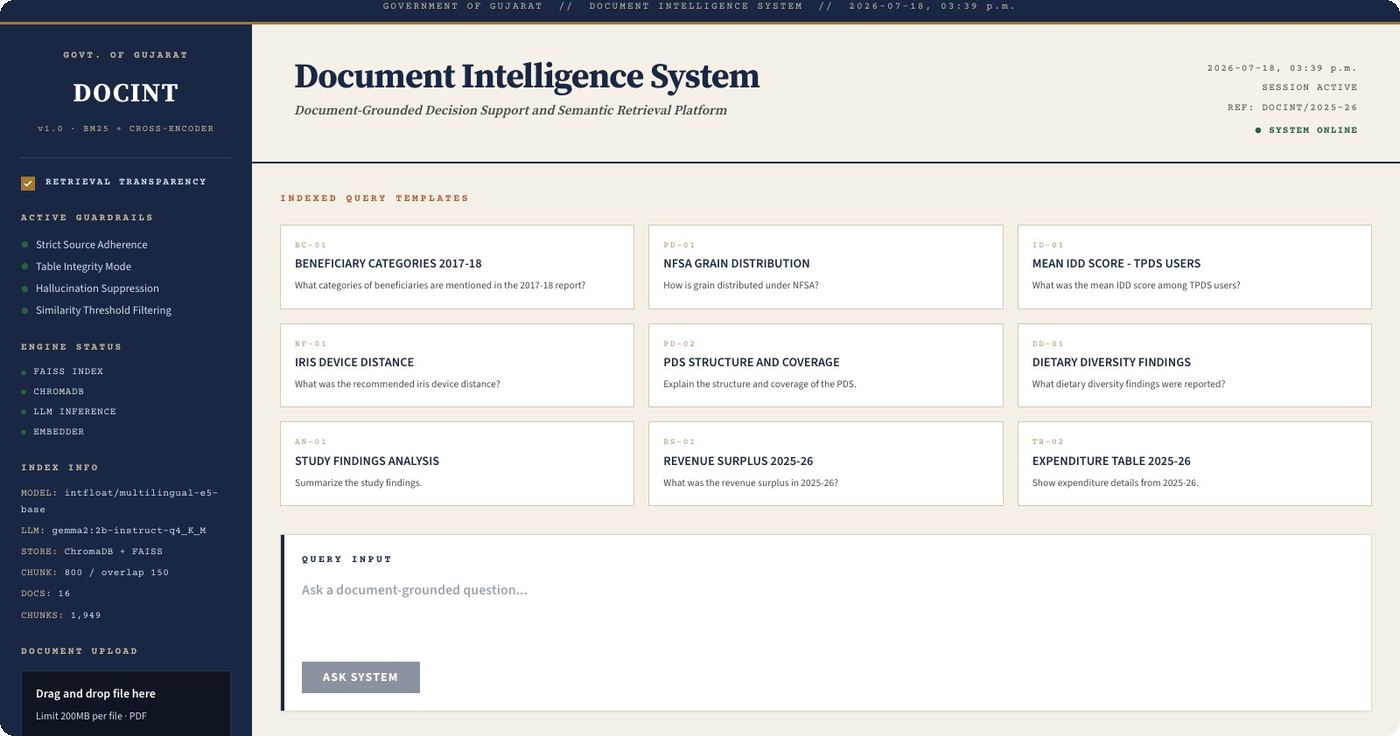 |
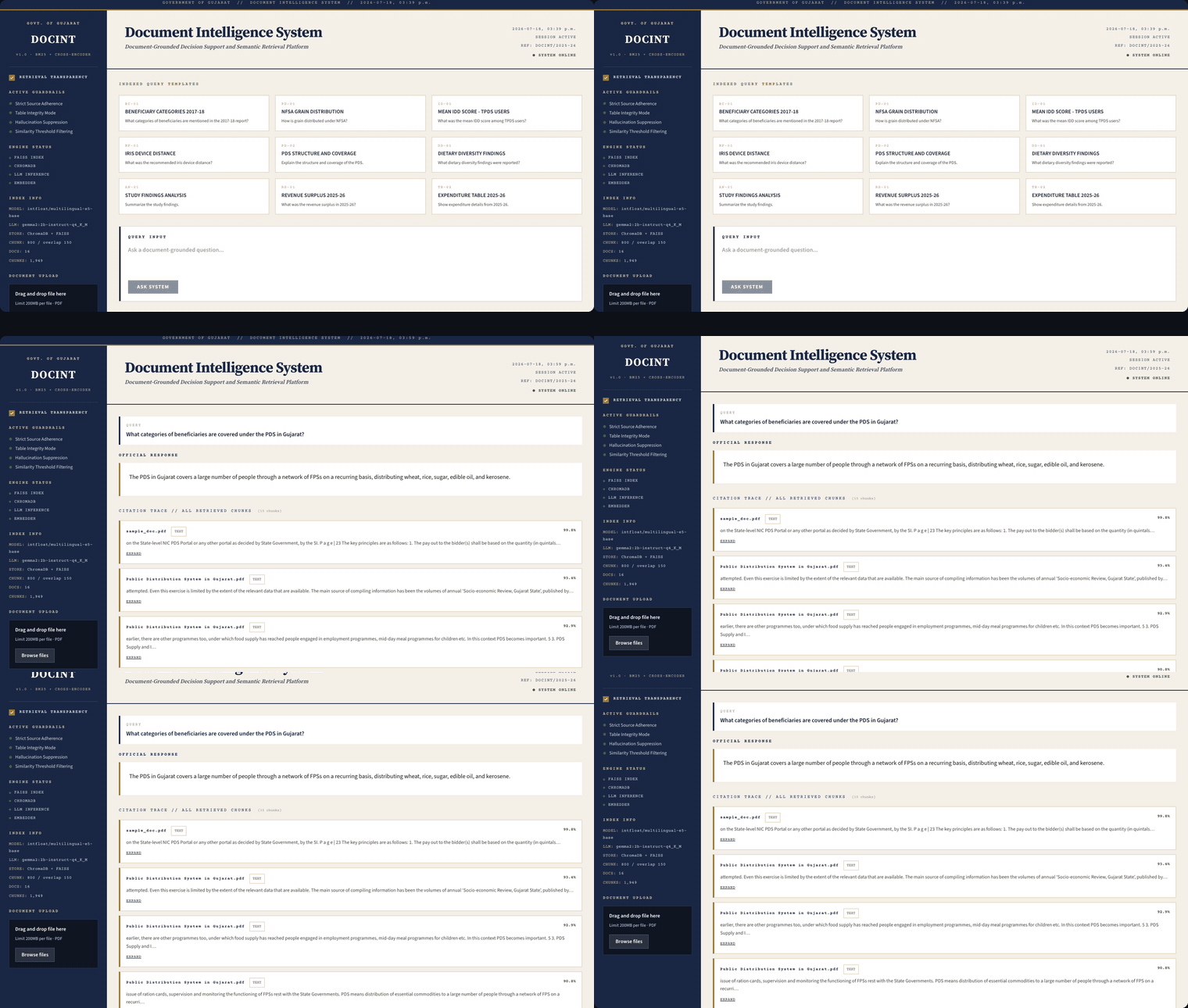
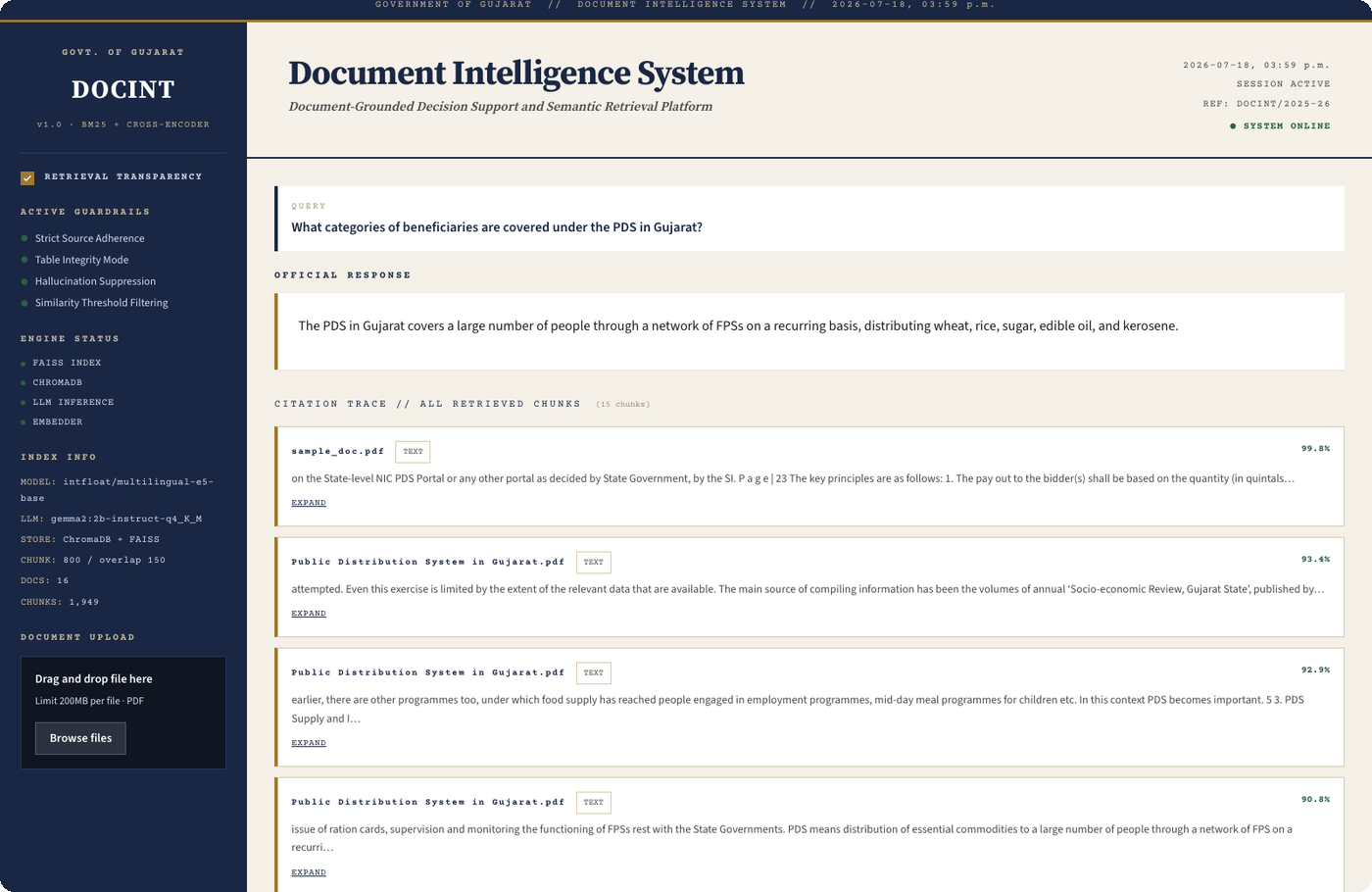
| Vectorless RAG — conversational interface | Hybrid RAG — conversational interface |
 |
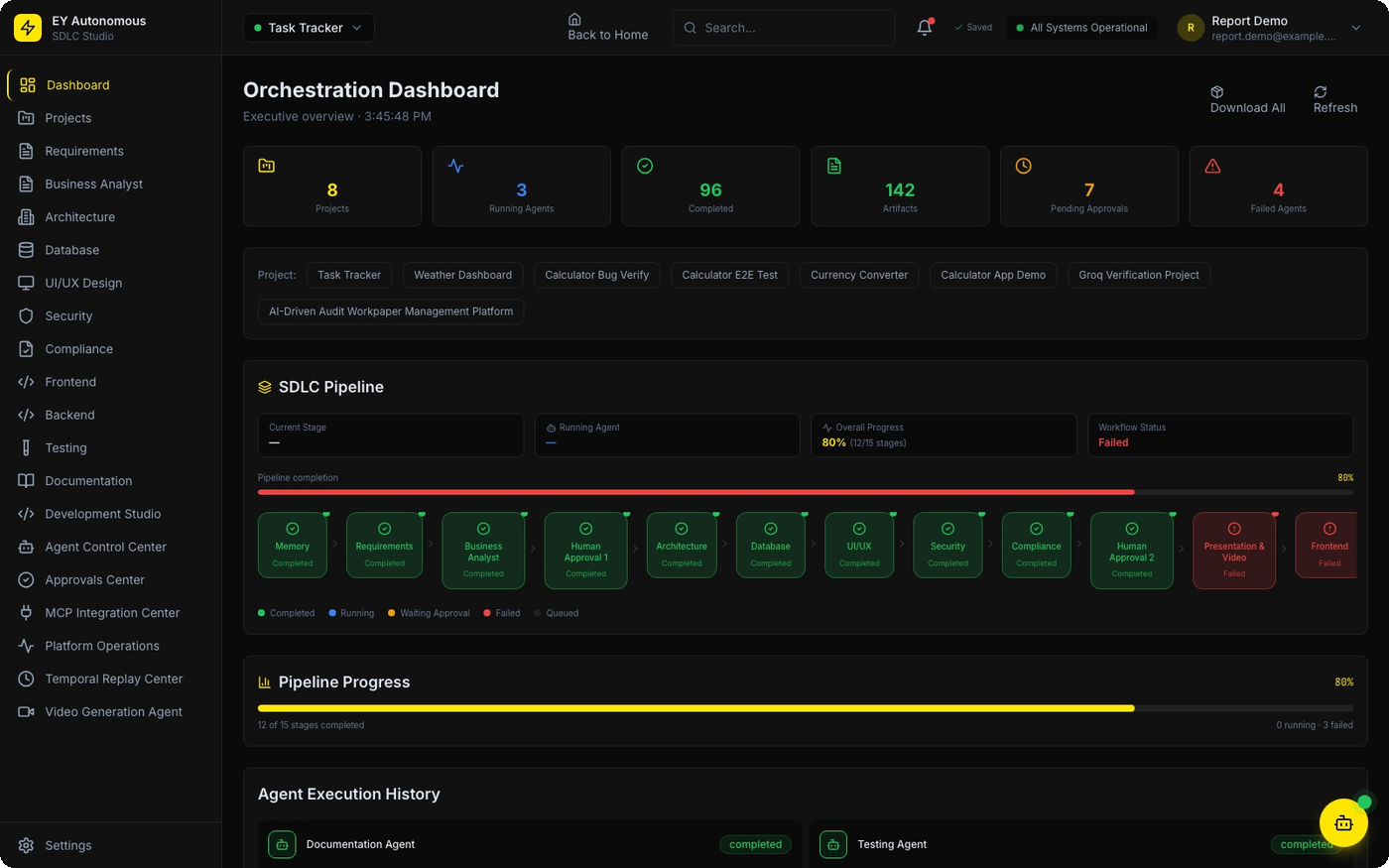 |
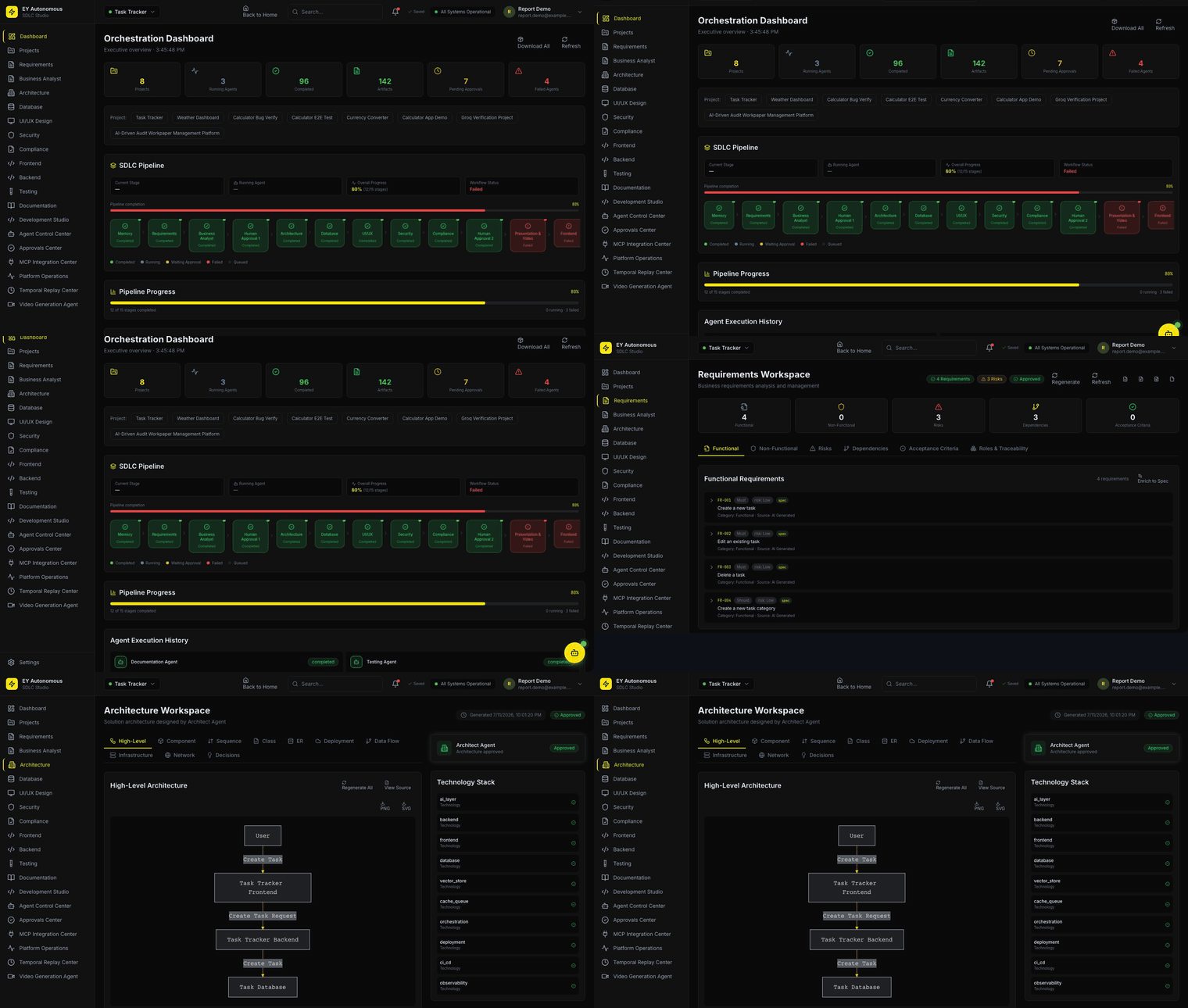
| Hybrid RAG — citation trace | SDLC Platform — orchestration dashboard |
 |
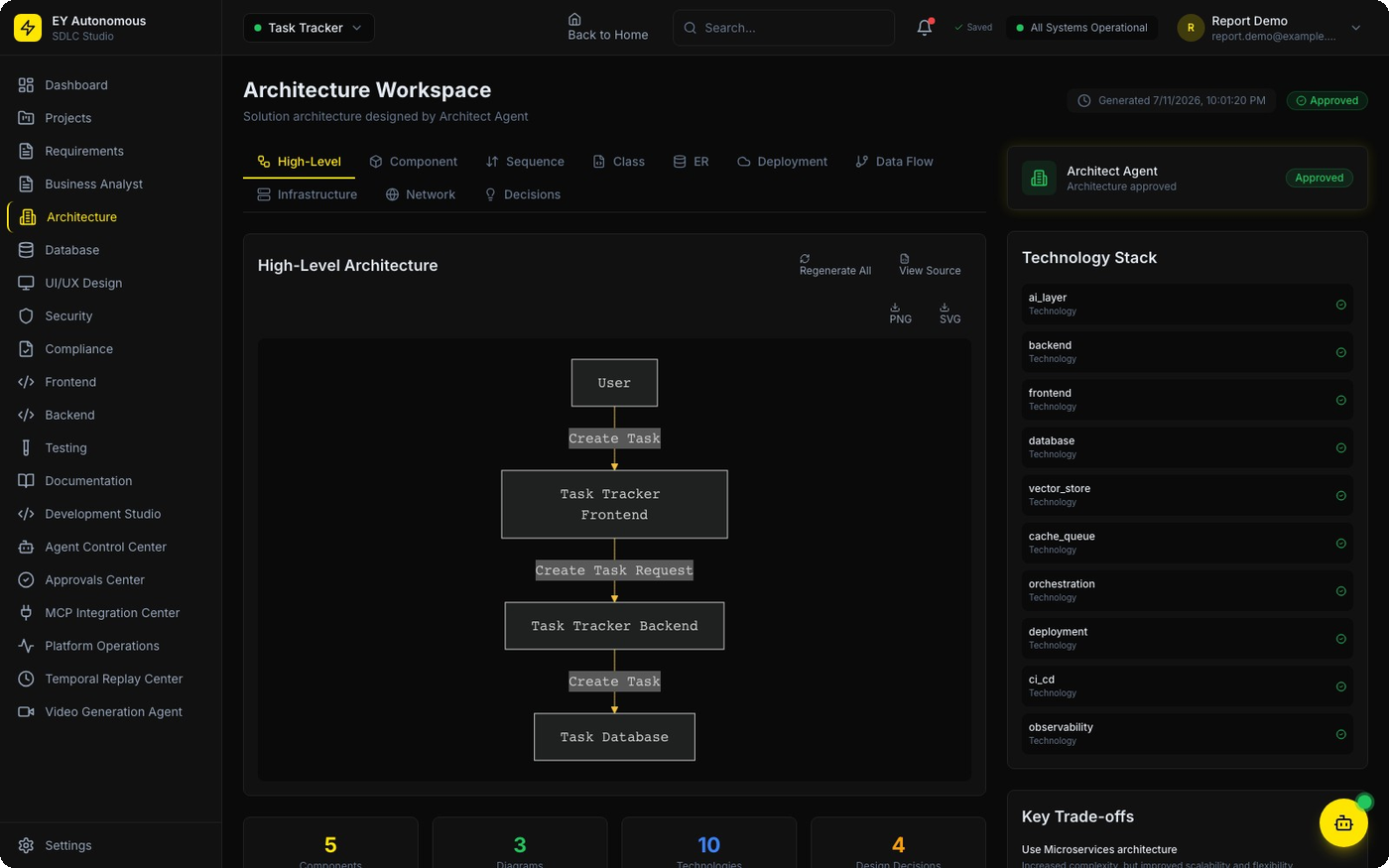 |
| SDLC Platform — requirements workspace | SDLC Platform — architecture workspace |
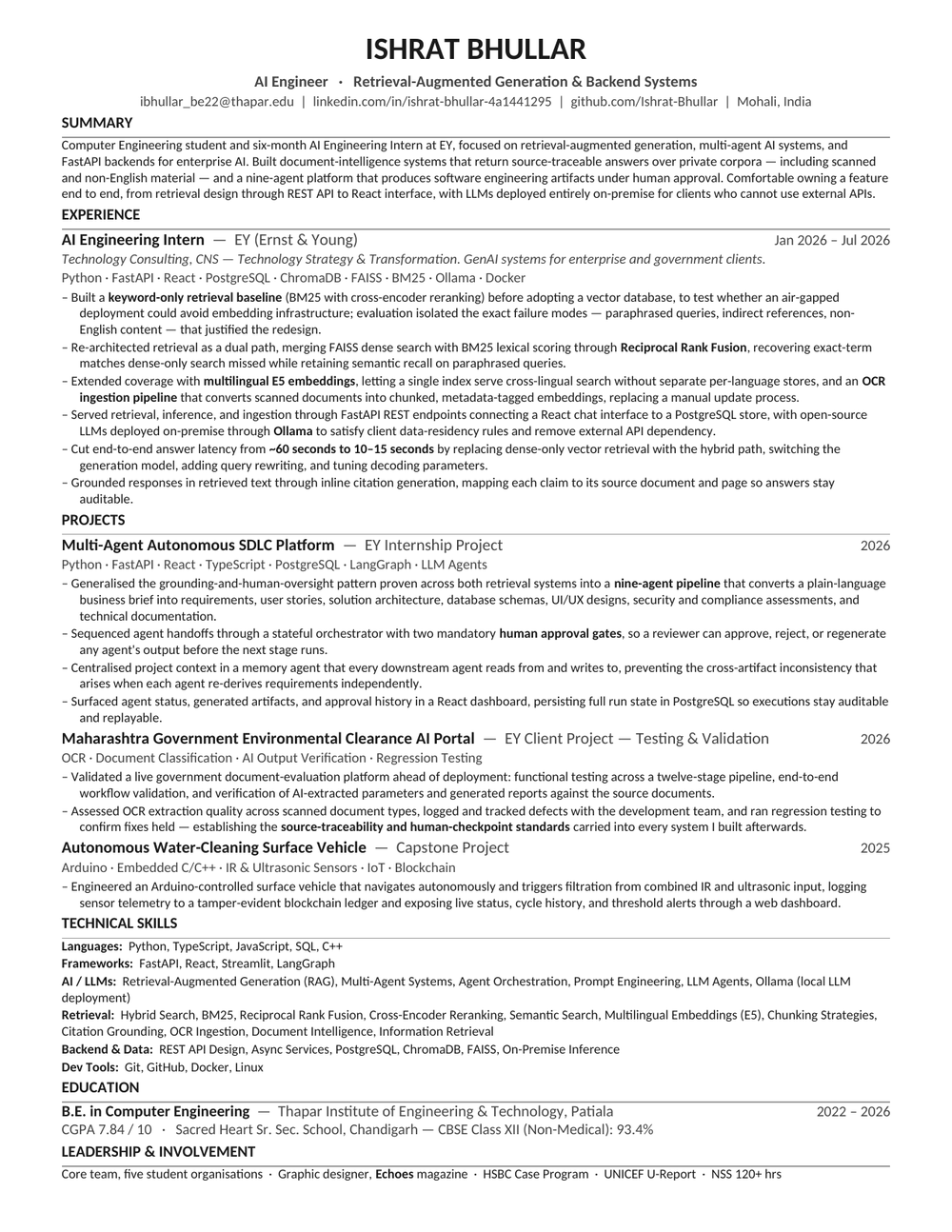
AI Engineer — Retrieval-Augmented Generation & Backend Systems
Single page, ATS-friendly. B.E. Computer Engineering, Thapar Institute of Engineering & Technology, 2022–2026.

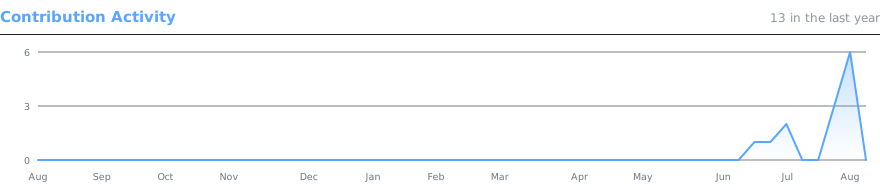
Recent activity
- Pushed to Ishrat-Bhullar · 5 days ago
- Pushed to sdlc-platform · 5 days ago
- Pushed to rag-chatbot-mongodb · 6 days ago
- Pushed to vectorless-chatbot · 6 days ago
- Created branch
mainin Ishrat-Bhullar · 8 days ago
LinkedIn · ishratbhullar@gmail.com · Resume
Open to AI engineering and backend roles · Mohali, India
Enterprise AI Systems: Document Intelligence and Autonomous Multi-Agent Software Delivery at Ernst & Young.
Interface recordings are from the same report. Per enterprise confidentiality, no source code, prompt text
or internal configuration is reproduced — systems are shown at architecture level only.
Every diagram, chip, card and demo on this page is generated by the scripts in
scripts/.