
Reflected Cross-Site Scripting (Reflected XSS) is a type of security vulnerability that occurs when an application includes data controlled by an attacker in an HTTP response without appropriate context-aware output encoding. In this scenario, the malicious script is sent to the server as part of a request, then reflected back to the victim's browser, where it is executed within the context of a trusted website.
- Identify a Vulnerable Input: The attacker finds an input parameter in the application that is reflected in the server's response.
- Craft a Malicious Request: The attacker embeds malicious JavaScript in a URL, form submission, or other types of requests.
- Victim Interaction: The victim clicks the harmful link or submits the crafted request.
- Server Reflection: The application reflects the attacker-controlled input in the HTTP response without proper output encoding.
- Script Execution: The victim's browser executes the injected JavaScript.
- Session Hijacking: Attackers can steal session information or authentication tokens from victims, allowing access to user accounts.
- Sensitive Data Theft: Attackers may access information available within the victim's browser session or extract data shown by the vulnerable application.
- Account Compromise: Attackers can perform unauthorized actions on behalf of the victim, such as changing account settings or accessing protected resources.
- Phishing and Social Engineering: Attackers can inject fake login forms, misleading messages, or malicious content to trick users into revealing their credentials.
- Unauthorized Actions: Attackers can execute requests with the victim's existing permissions to perform actions the user is authorized to undertake.
- Perform Context-Aware Output Encoding: Always encode user-supplied data before including it in HTML, JavaScript, CSS, or URL contexts.
- Validate User Input: Ensure user input matches expected formats and lengths. Input validation should complement, not replace, output encoding.
- Implement Content Security Policy (CSP): Use CSP to reduce the impact of any injected scripts.
- Avoid Reflecting Untrusted Input: Refrain from including user-supplied data in responses unless it has been properly encoded.
- Use Secure Framework Features: Utilize templating engines and frameworks that automatically encode output by default.
Clone this current repo recursively
git clone --recurse-submodules https://github.com/qeeqbox/reflected-cross-site-scriptingRun the webapp using Python
python3 reflected-cross-site-scripting/vulnerable-web-app/webapp.pyOpen the webapp in your browser 127.0.0.1:5142
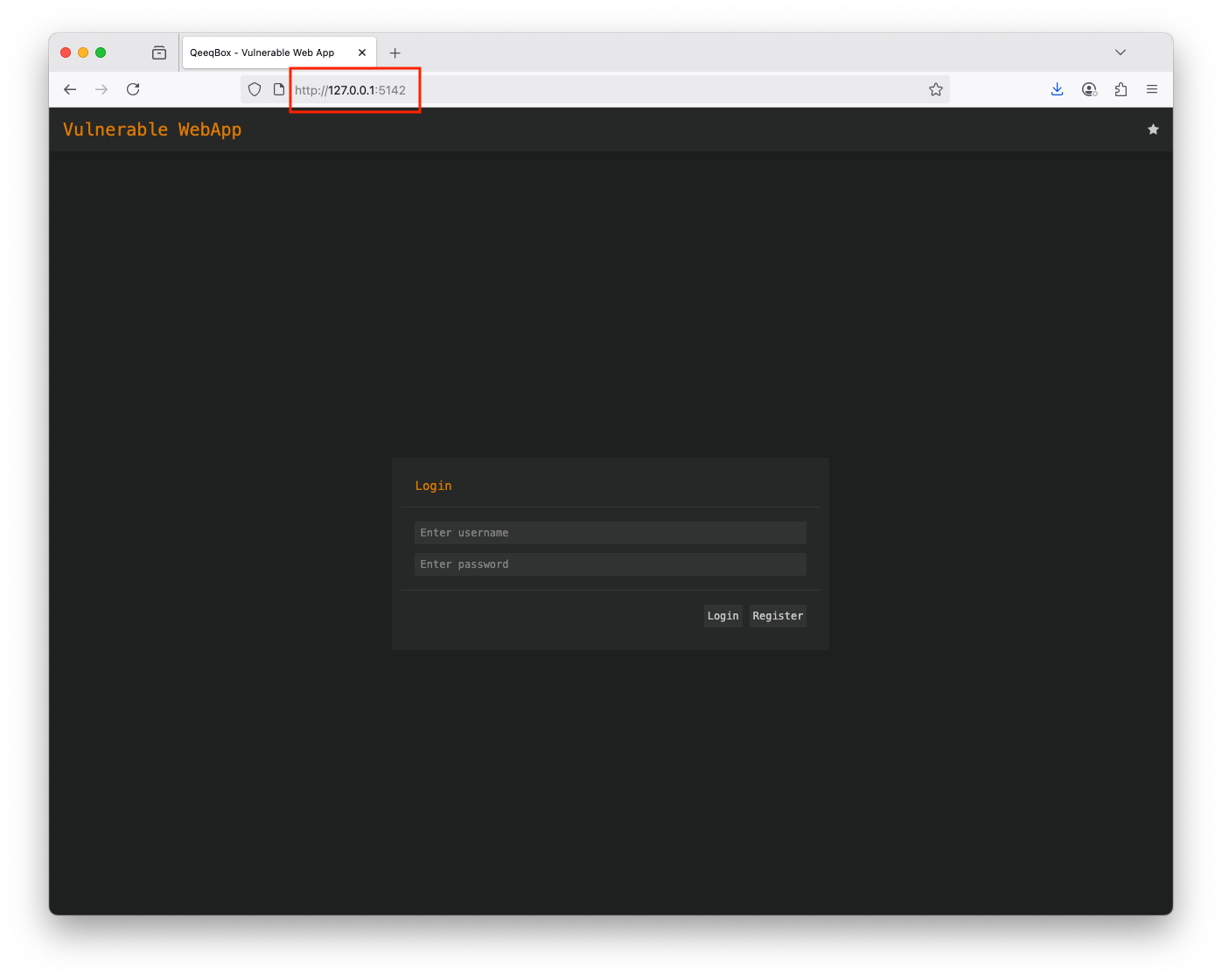
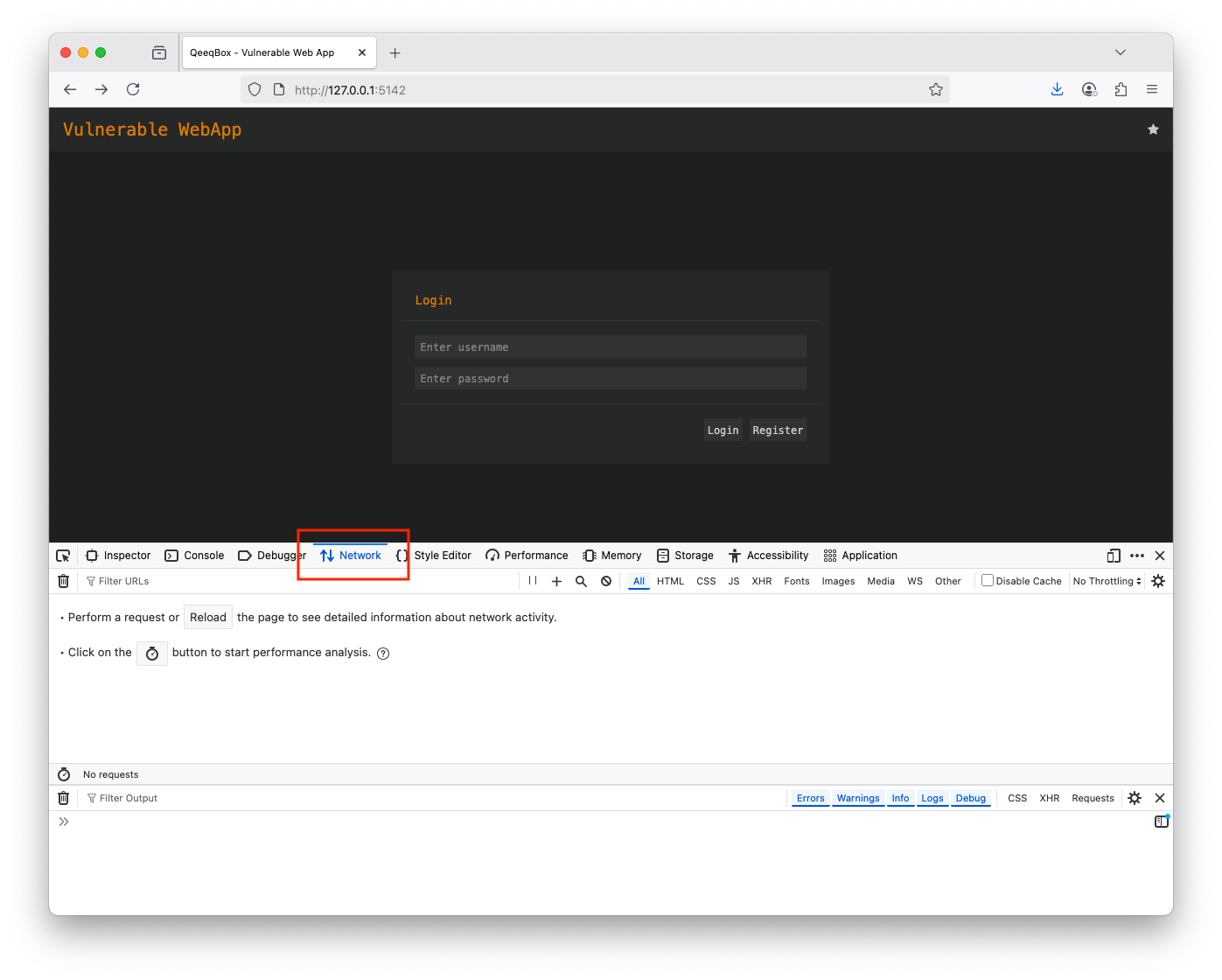
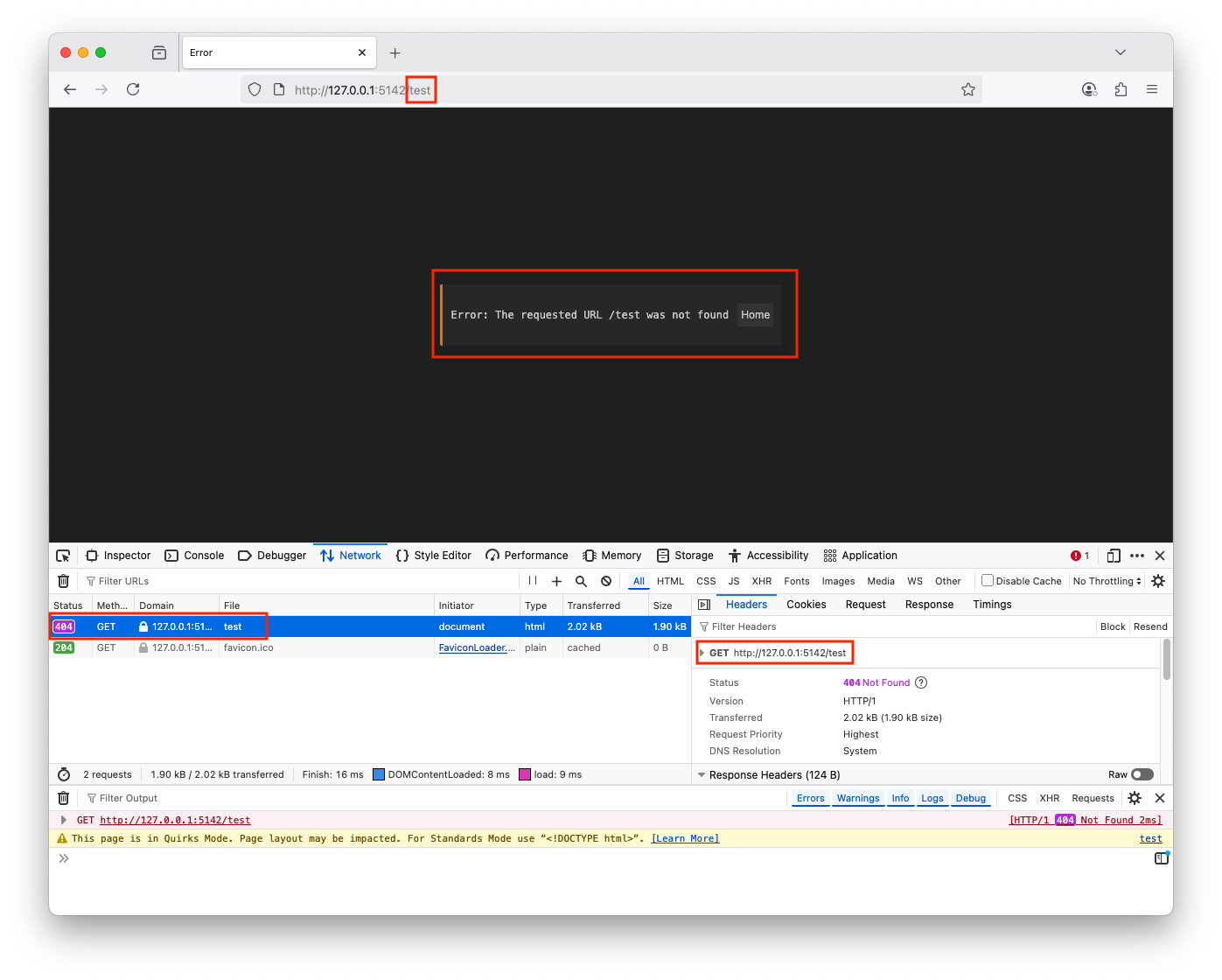
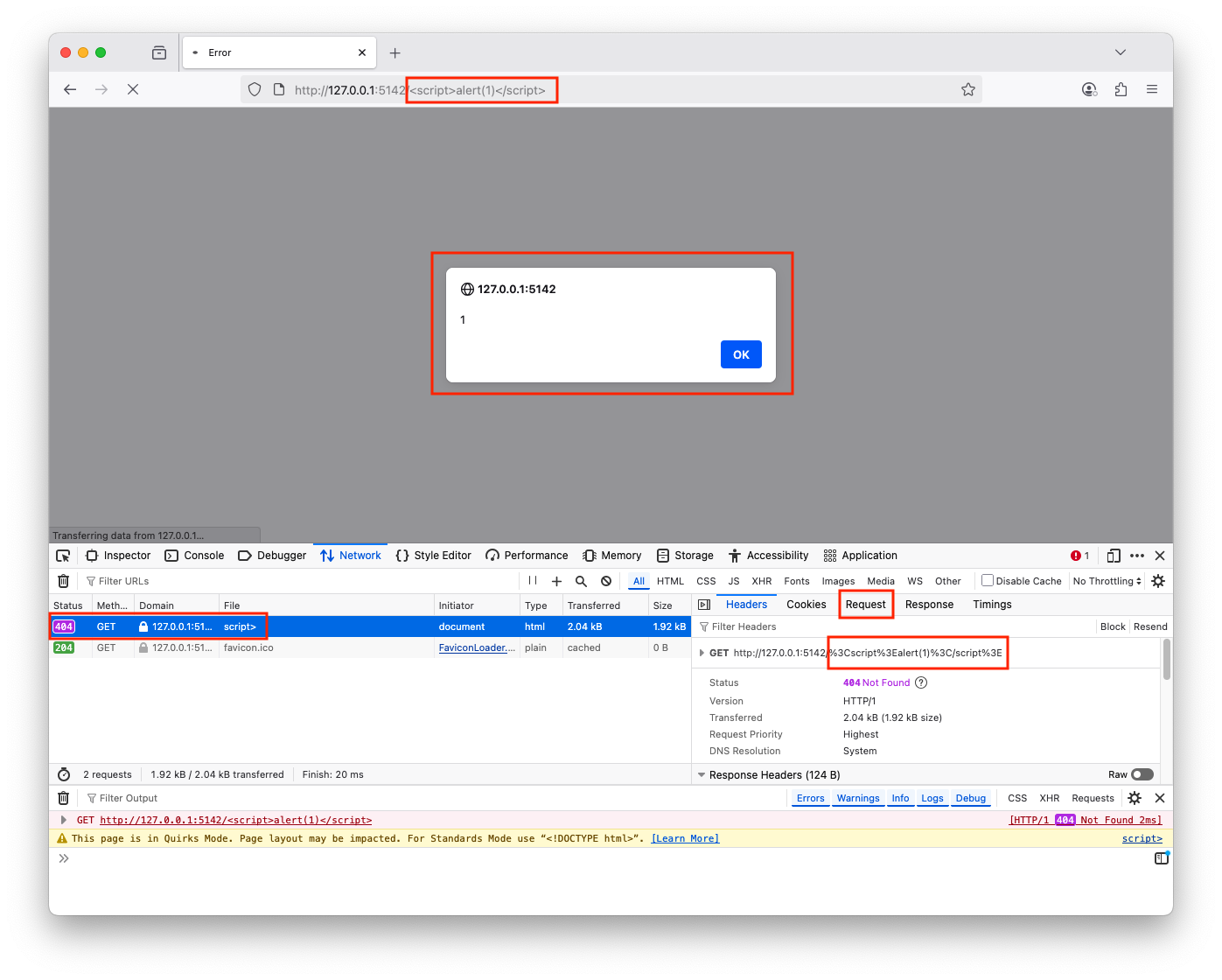
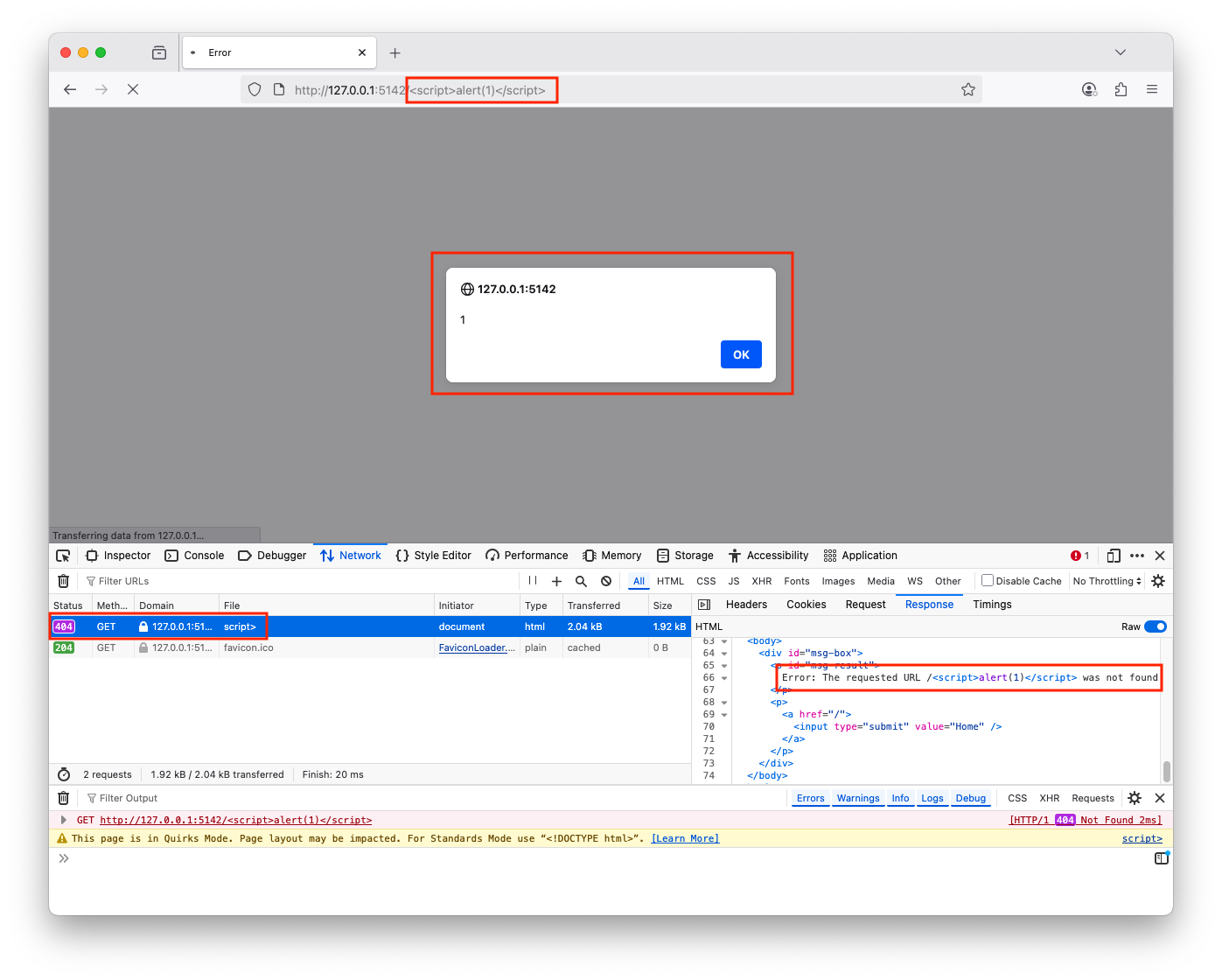
This logic will check if the requested page has a route or exists, if it does not, then it will pass the requested page value to the msg_page() function
def do_GET(self):
    ...
    self.send_content(404, [('Content-type', 'text/html')], self.msg_page(f"Error: The requested URL {urllib_parse.unquote(parsed_url.path)} was not found".encode("utf-8")))
    ...
The msg_page() function will embed the user value in the webpage
def msg_page(self, msg, prev=None):
    with open(path.join(TEMPLATE_FOLDER,"msg.html"),"rb") as fi:
        if prev:
            return fi.read().replace(b"{{msg-result}}",msg).replace(b"{{msg-prev}}",prev).replace(b"{{msg-page}}",b"Return")
        else:
            return fi.read().replace(b"{{msg-result}}",msg).replace(b"{{msg-prev}}",b"/").replace(b"{{msg-page}}",b"Home")