A lightweight and numba-accelerated Gumbel MCTS implementation.
Optimized for speed! Generates hundreds of thousands of sims / sec. 🚀
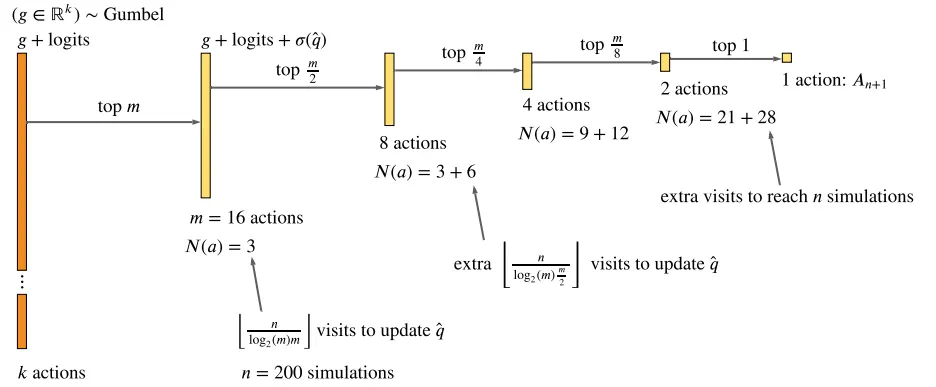
Improving MuZero using the Gumbel top-k trick, by Xavier O'Keefe
Gumbel sampling brought tremendous progress to MCTS, but efficient standalone implementation of Gumbel MCTS are missing.
We provide three MCTS implementations:
-
puct.py: an efficient implementation of PUCT MCTS. It produces the exact same output as a reference mcts_v2.py but but with a 2-20X speedup on both Mac and NVIDIA GPUs. -
gumbel_dense.py: an implementation of Policy improvement by planning with Gumbel, offering massive learning efficiency when the simulation budget is low -
gumbel_sparse.py: a sparse implementation of Gumbel MCTS, particularly useful for games with large action spaces (e.g. chess)
Our Gumbel implementation offers both simulation efficiency and speed.
See gumbel-mcts-benchmark for full benchmark and validation against a gold standard MCTS.
def play_game():
    logic = TicTacToeLogic()
    model = TinyModel()
    model.eval()

    board = np.zeros((3, 3), dtype=np.int8)
    player = 1
    symbols = {0: ".", 1: "X", 2: "O"}

    while True:
        tree = GumbelSparse(n_games=1, max_nodes=500, device="cpu", logic=logic)
        tree.initialize_roots([0], board.ravel()[None], np.array([player]))
        move = tree.run_simulation_batch(model, [0], num_simulations=50)
        action = move[0]

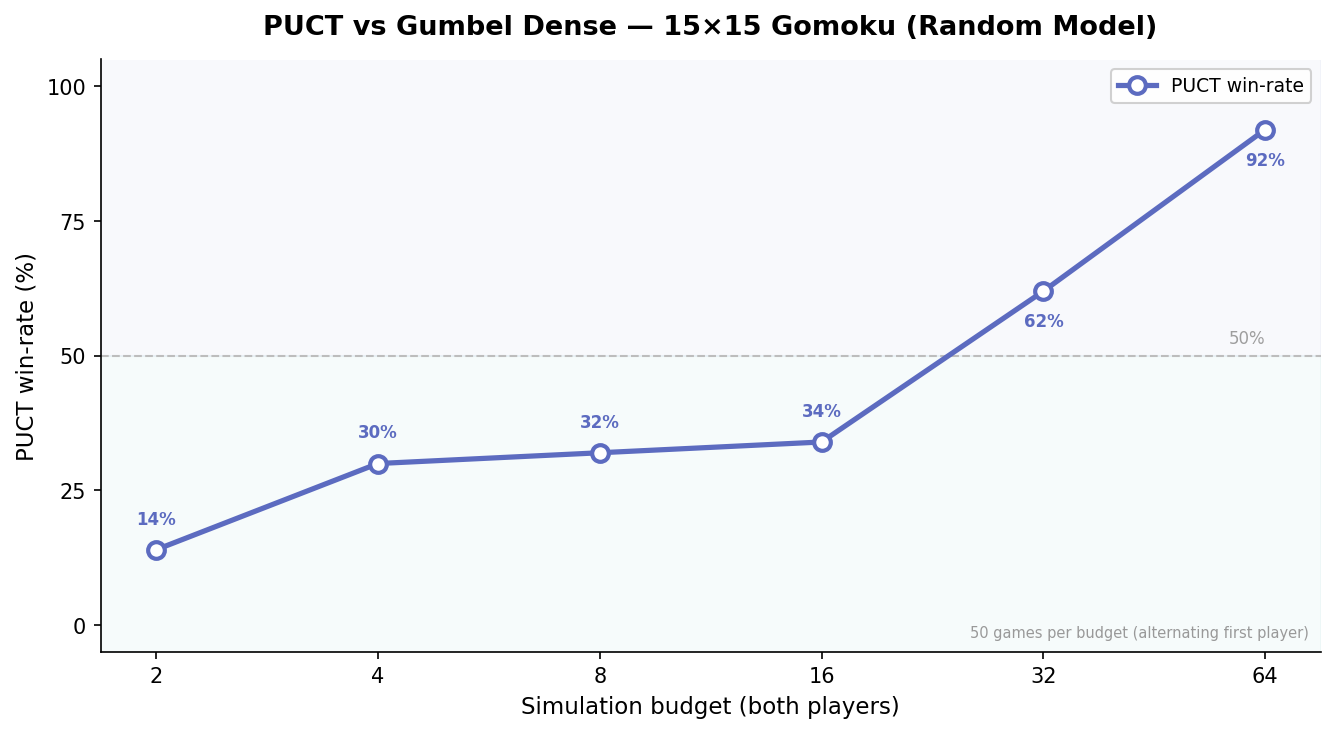
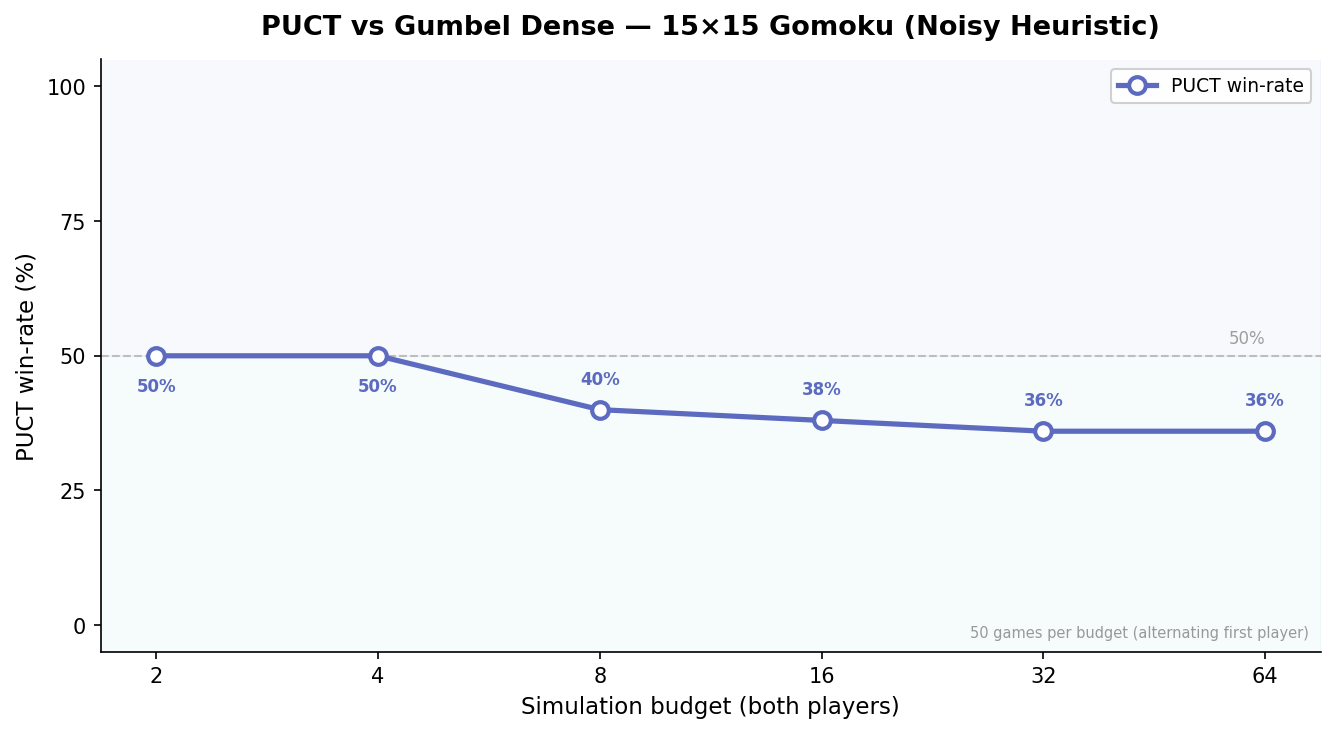
_, winner, done, board = logic.fast_step(board, action, player)With a random model, Gumbel wins with low-budget but PUCT catches up. As soon as the model gets better than random, Gumbel wins.
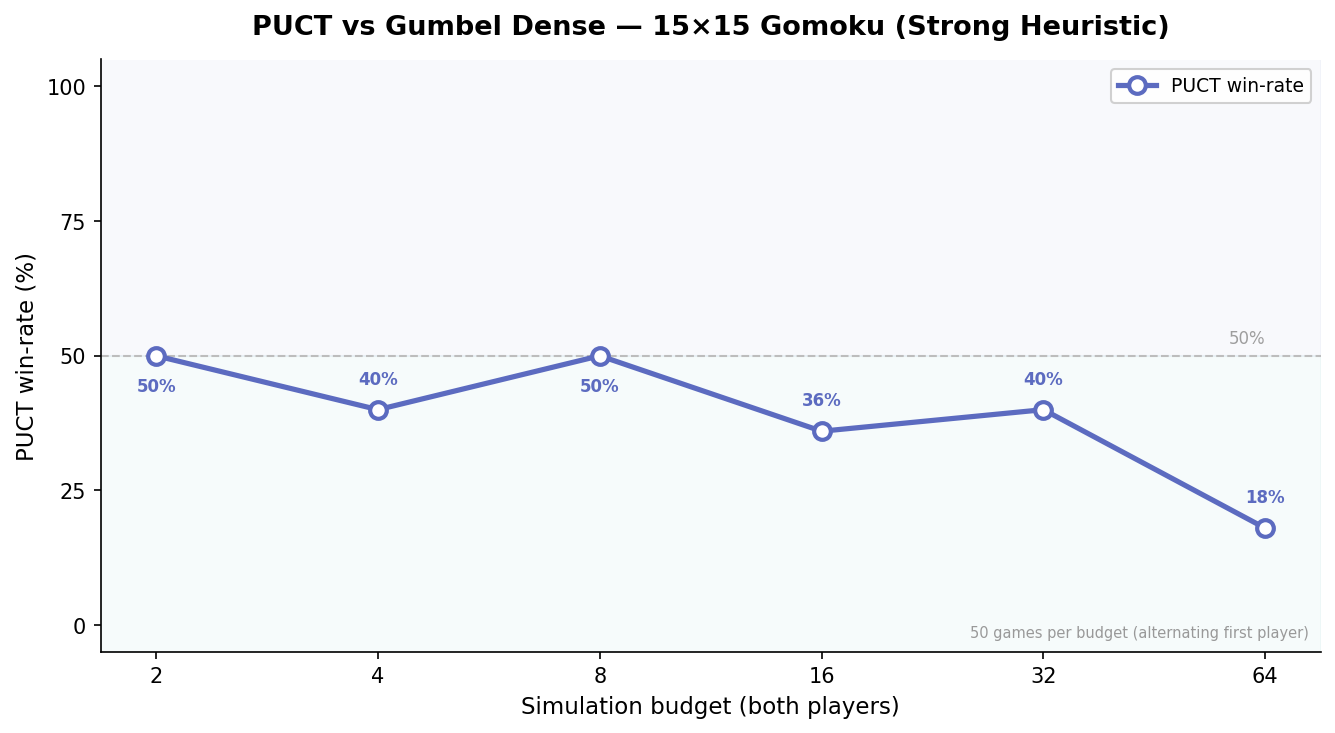
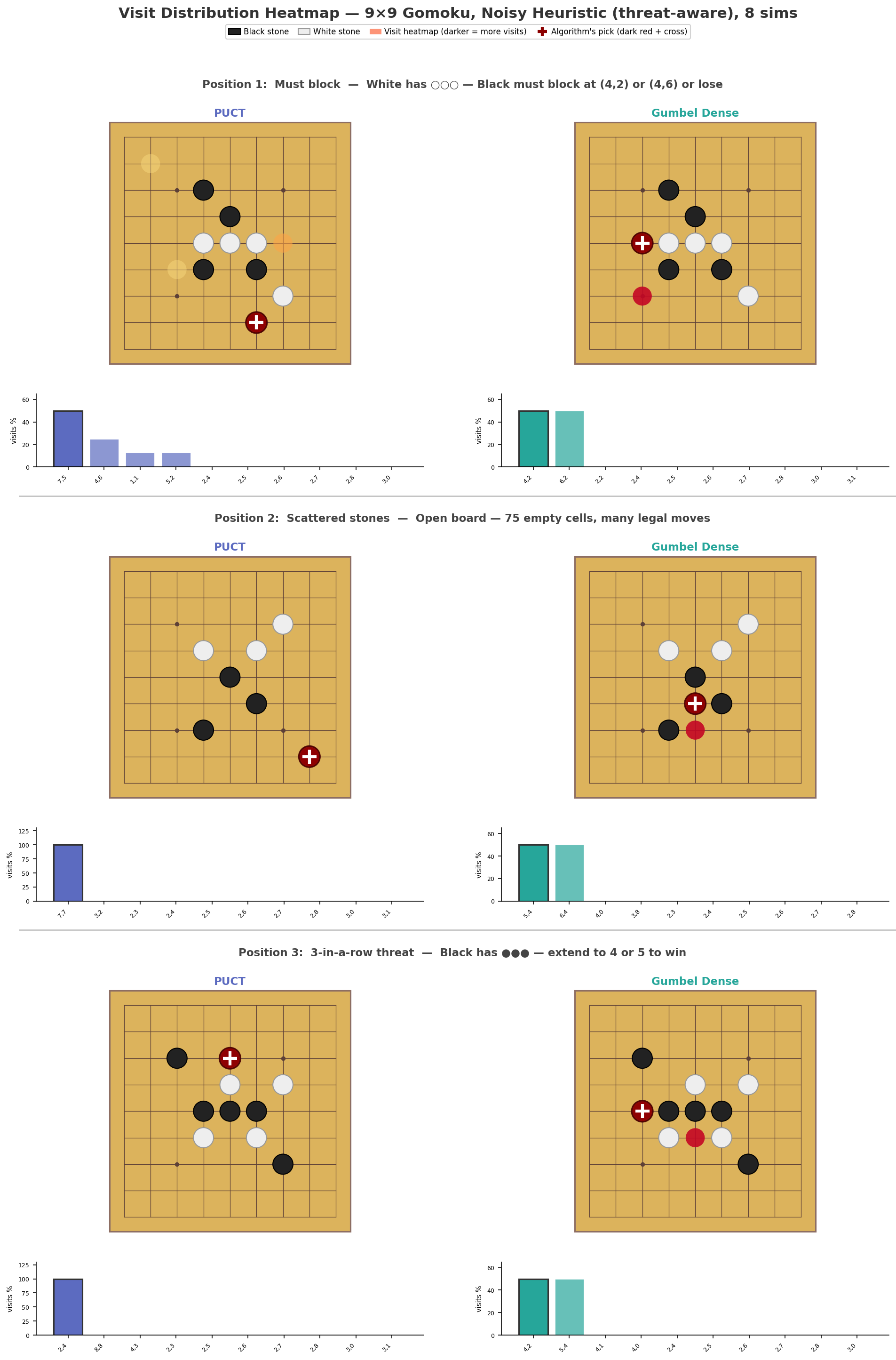
Gumbel MCTS makes much better use of its simulation budget. With 8 sims on Gomoku, Gumbel finds the strategic moves while PUCT concentrates its visit counts at the wrong place.