JAX-native robotics — from a URDF to a calibrated, deployable robot model.


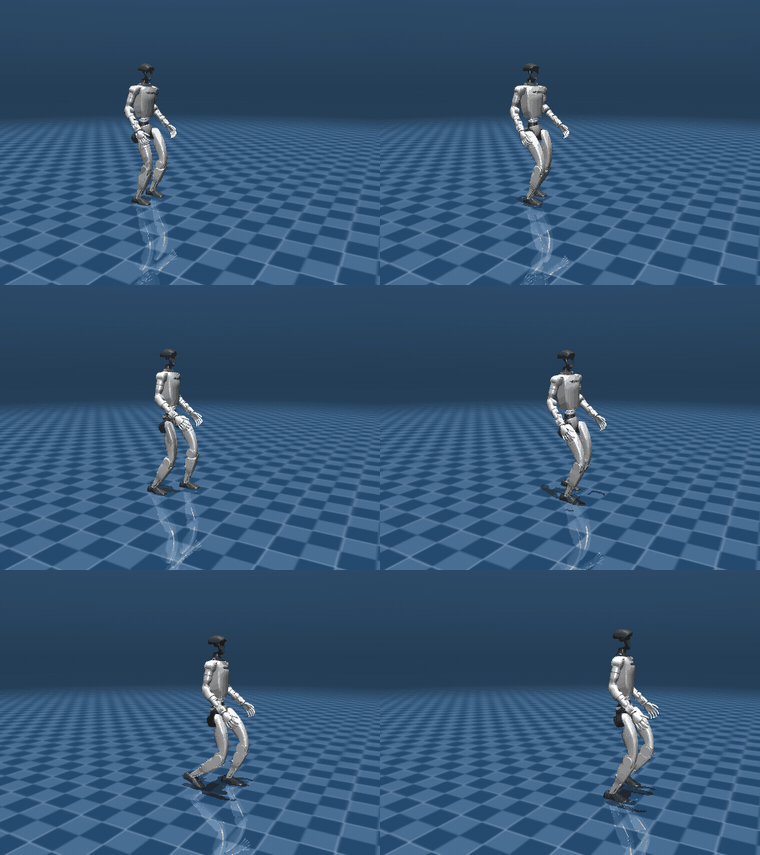 Unitree G1 — humanoid whole-body locomotion |
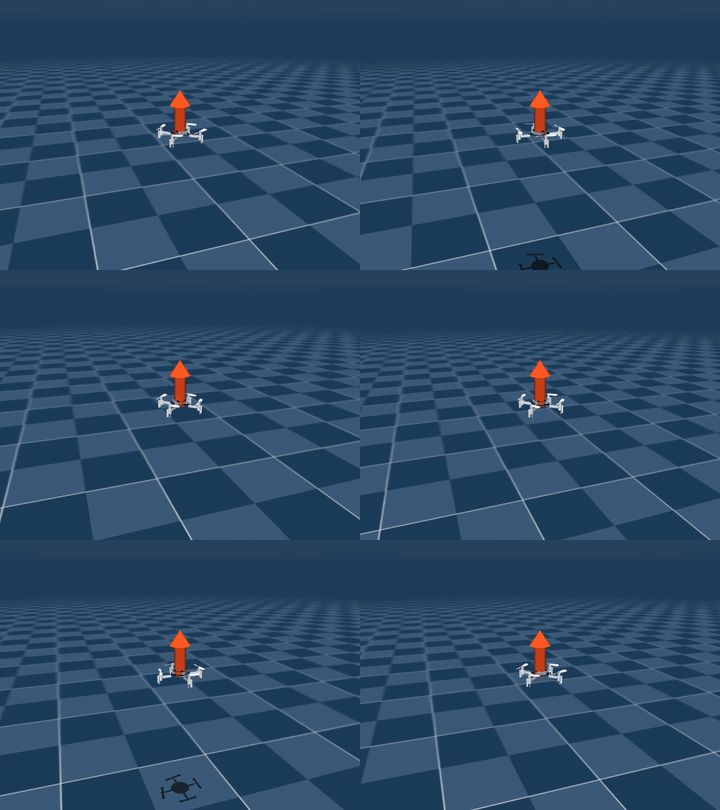 Crazyflie — quadrotor differentiable flight · vmap'd swarms |
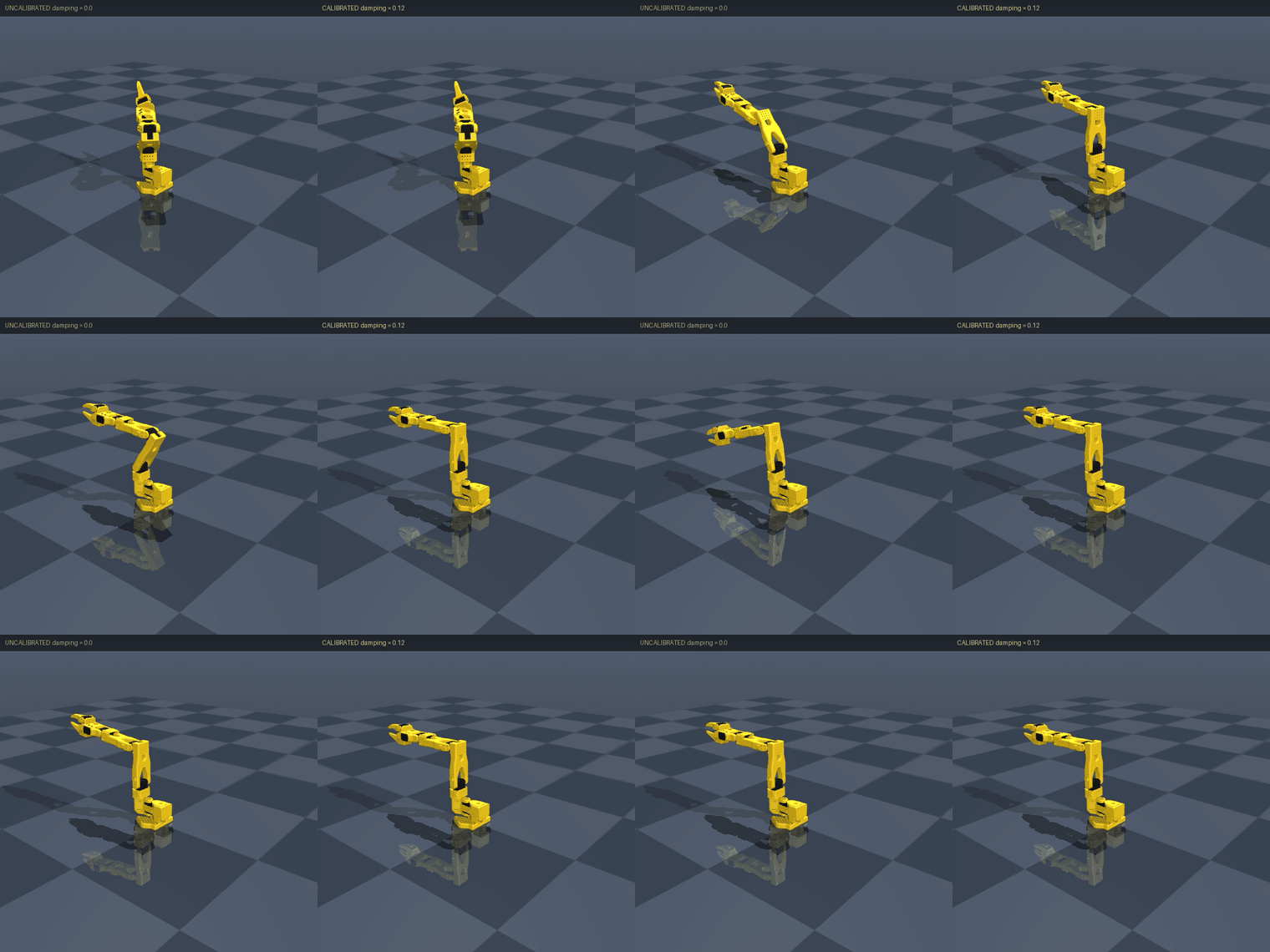
SO-101 arm · uncalibrated (overshoots) ‖ calibrated to real telemetry (settles)
Jaxterity turns a robot description (URDF/MJCF) into a differentiable simulation, calibrates that simulation against real hardware telemetry so it matches the physical machine, and carries one attested model all the way to embedded deployment. The model you tune is the model you ship — no sim-to-real model swap in the middle.
It is built on MJX (GPU/TPU MuJoCo) for
articulated dynamics and on the
Jaxonomy simulation engine, so
every robot is a JAX program: jit-compilable, vmap-batchable, and
differentiable end to end.
- One model, sim to silicon. A calibrated
Robothands off to Jaxility (the deployment compiler, forthcoming) as a single artifact. You design, calibrate, and deploy the same dynamics — not a sim model and a separate shipped model that quietly disagree. - Calibrated to your actual unit. System identification fits the model to real telemetry — per-joint friction and damping, per-servo thermal behaviour, battery sag — so the simulation tracks the physical robot, down to the serial number. On a real SO-100/LeKiwi arm the identified plant predicts joint torque 16–45% better than the raw URDF on held-out data.
- Differentiable through contact. Calibration, control design, and learning all run on one differentiable model. Forward-mode autodiff differentiates through MJX's joint-limit and contact solver — where naive reverse-mode cannot — so you get exact parameter sensitivities for free.
- Predictive self-check. A per-unit digital twin forecasts off-body state a body-only physics model never sees — servo heat, bus voltage — and vetoes a command that would cook a servo or brown out the battery before it is sent, naming the binding constraint and the time to breach.
- Attested provenance. Every calibrated model carries a content-hash attestation handle: a stable fingerprint over its structure and fitted parameters, so you can prove which model produced which controller.
- Import — URDF/MJCF → a
Robotwith an MJX-backed differentiable model. - Calibrate — forward-mode system identification of inertial, friction, and actuator parameters from telemetry, with covariance and provenance.
- Devices — calibrated actuator and sensor models (DC motor, servo, BLDC, harmonic drive, series-elastic; IMU, encoder, force/torque) you can fit and validate.
- Control — whole-body control primitives and a layered, agent-friendly "code-as-policies" API (raw torque → skills → high-level goals).
- Twins & safety — per-unit attested digital twins, a predictive self-check co-processor, a safety monitor (thermal / bus-voltage / torque limits), and pre-flight policy checks.
- Zoo — ready-to-run reference robots (cartpole, SO-100/SO-101 arm, Crazyflie, Unitree G1) with import + dynamics goldens.
Jaxonomy            Jaxterity                       Jaxility
(simulation     →   (this library:              →   (deployment compiler,
 engine)            robotics + calibration)         Arm SoC + attestation)
Jaxterity imports Jaxonomy for the general-purpose simulation primitives
(Diagram, simulate, solvers, autodiff) and never re-implements them; it adds
everything robot-specific on top.
pip install jaxterity            # core
pip install "jaxterity[all]"     # optional extras (render, data, MCP, …)
Or from a clone, for development:
pip install -e ".[all,dev]" # contributors / CIRequires Python 3.11+ and pulls in Jaxonomy (the simulation engine) from PyPI. The render/zoo helpers use MuJoCo; no GPU is required to run the examples.
End-to-end system identification on a real arm —
examples/sysid_so101.py: load the open-source
SO-101 URDF, simulate it under gentle excitation to generate telemetry, then
recover unknown joint damping from that telemetry with forward-mode autodiff
(differentiating through MJX's joint-limit constraint solver), and emit a
calibrated, attested Robot.
pip install -e ".[mujoco]"
python -m examples.sysid_so101examples/nanojaxterity.py is the Karpathy-style
end-to-end demo — top to bottom in a single readable file, no hidden machinery:
load the cartpole with its committed calibration, build a fast functional MJX
environment, train a small self-contained PPO agent to balance the pole, and
check the result against a committed golden.
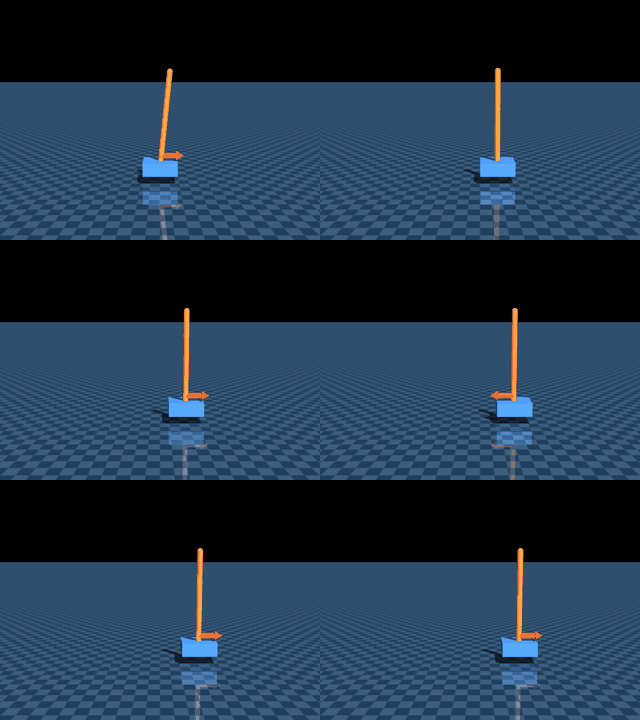
python -m examples.nanojaxterityDeployment to embedded targets — the final leg of URDF → calibrate → train → ship — is handled downstream by Jaxility.
For a guided, visual walkthrough with MuJoCo animations, see the notebook
examples/calibrate_so101.ipynb, and the
tutorials index for one worked example per robot. A
short mental model of how MJCF, MJX, and Jaxonomy fit together is in
Jaxterity in one picture.
1.0 covers a stable core: URDF/MJCF import, MJX-backed differentiable
dynamics, forward-mode system identification, the reference zoo, the attestation
handle, and the per-unit twin + predictive self-check stack — each backed by
CI-green evidence in CLAIMS.md
(some fit from real hardware telemetry).
Some subsystems are still filling in and are best treated as preview: the
full whole-body-control stack (the primitives are here; the contact scheduler is
not complete), the turnkey sysid-recipe catalogue, and complete actuator/sensor
family coverage. Embedded deployment is owned by Jaxility, not this repo. Each of
these is written down in
KNOWN_GAPS.md,
kept symmetric with the claims ledger. Read both before depending on a surface.
bash scripts/check.sh # ruff lint + format, mypy, pytestMIT — see LICENSE.md.