Our goal is to build a speaker recognition/identification system, which can be able to identify a person from the characteristics of his/her voice. In other words, we want to know who is speaking rather than recognizing what is being said.
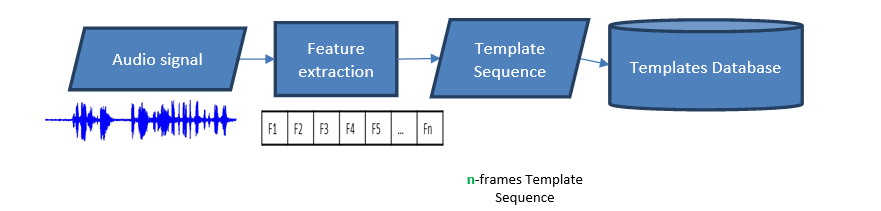
In this phase, a new user is introduced to the system. We create a unique template for the user that will be used later during the identification phase. For example, a UI form will collect the user’s name and voice recording, storing this data as a voice template in the database for future recognition.
In this phase, we aim to identify an unknown user. The process begins by building a sequence from the user’s input. Next, we compare this new input sequence against a database of stored voice templates to find the best match.
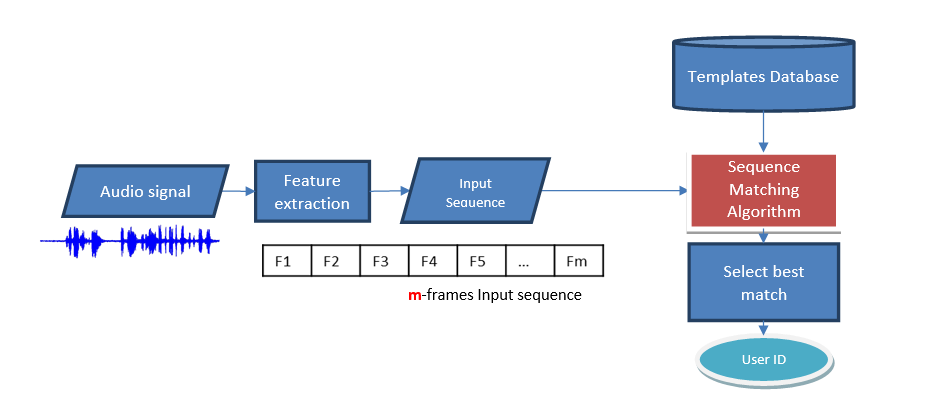
To improve the matching process, we need to design a sequence matching algorithm that optimizes the search. This will include techniques like pruning to limit the search paths and control the path cost (using methods such as beam search). Additionally, we may explore time synchronization search to enhance accuracy and efficiency during the matching process.