


Polytech Lille · Differential Algebra & HPC & AI · Seeking PhD



I'm an engineering student at Polytech Lille (graduating August 2027). During my 3rd-year internship at CRIStAL (UMR 9189, Université de Lille), I worked under the supervision of François Boulier on differential algebra and the algorithmic resolution of algebraic differential equations — specifically, detecting Puiseux series solutions via monomial changes of variable.
I'm currently completing my 4th-year internship at NTT Data, where I work on advanced optimization of truck fleet problems using machine learning, deep learning, reinforcement learning, and Automated Heuristic Design (AHD) with metaheuristics. I also contribute to quantum security projects involving Quantum Key Distribution (QKD) and Post-Quantum Cryptography (PQC).
Starting September 2026, I'll be on an Erasmus exchange at Politecnico di Milano (Polimi) for my final semester.
I build projects at the intersection of mathematical computing, high-performance computing, and artificial intelligence. My work spans from custom CUDA kernels for transformer training to bit-level optimized Monte Carlo simulations. I'm seeking a PhD starting September 2027 in AI, HPC, or applied mathematics.


Developed a complete method for detecting and computing Puiseux series solutions (fractional-exponent power series) of algebraic ordinary differential equations, via the monomial change of variable
Key results:
- Congruence condition for efficient FPS existence filtering before costly differential elimination
- Completeness theorem: monomial changes suffice among all algebraic changes of variable
-
Effective bound
$b \leq \deg(P)$ via Newton differential polygon -
Two algorithms:
fast_decision($O(N \cdot D^2)$ without Denef–Lipshitz) andfull_solver
→ puiseux-differential-algebra — Code, algorithms, and 15-page paper.
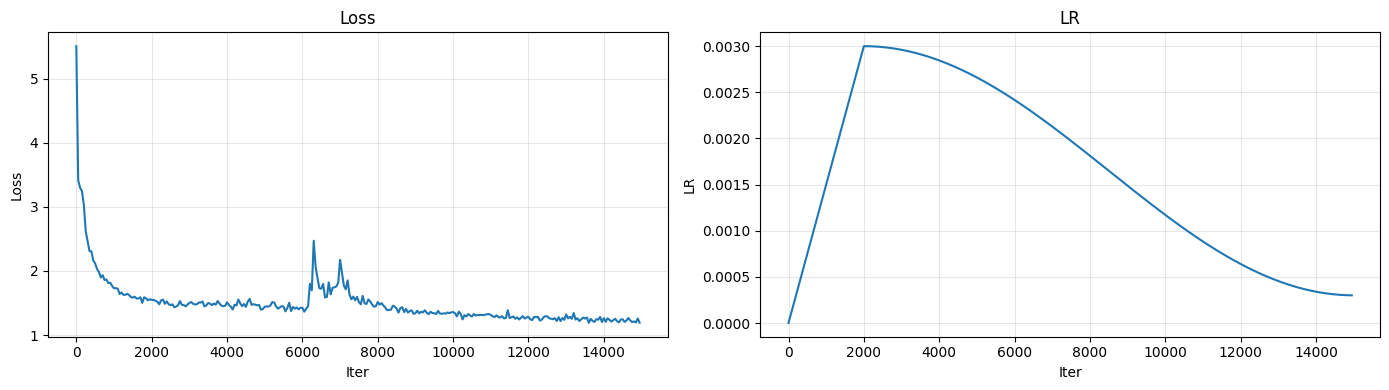
A GPT language model built entirely from scratch in C++ and CUDA — no PyTorch, no TensorFlow. Custom kernels for Softmax, GELU, RMSNorm, AdamW, and cross-entropy. Uses cuBLAS for matrix multiplies.
- ~2.7M parameters, 6 transformer blocks, 192-dim embeddings
- Trained on Shakespeare (1.1M chars) on NVIDIA T4 — 5.51 → 1.19 loss
- Xavier init, AdamW, learnable RMSNorm, LR warmup + cosine decay
- All forward/backward passes hand-written
A custom chess engine in C with bitboard move generation, NNUE evaluation (768→256→32→1), and alpha-beta search with Null Move Pruning and Late Move Reductions — plus a full reinforcement learning pipeline (self-play in C++ with LibTorch → Policy Gradient in Python).
| Metric | Perft (movegen) | Search (NNUE) |
|---|---|---|
| Speed | 51.8M NPS | ~10K NPS |
| Depth 5 | 93.9 ms | 11.3 s |
| Depth 6 | — | 191.7 s |
51.8 million nodes/sec in pure move generation. Search speed is limited by the missing transposition table — a planned future addition.
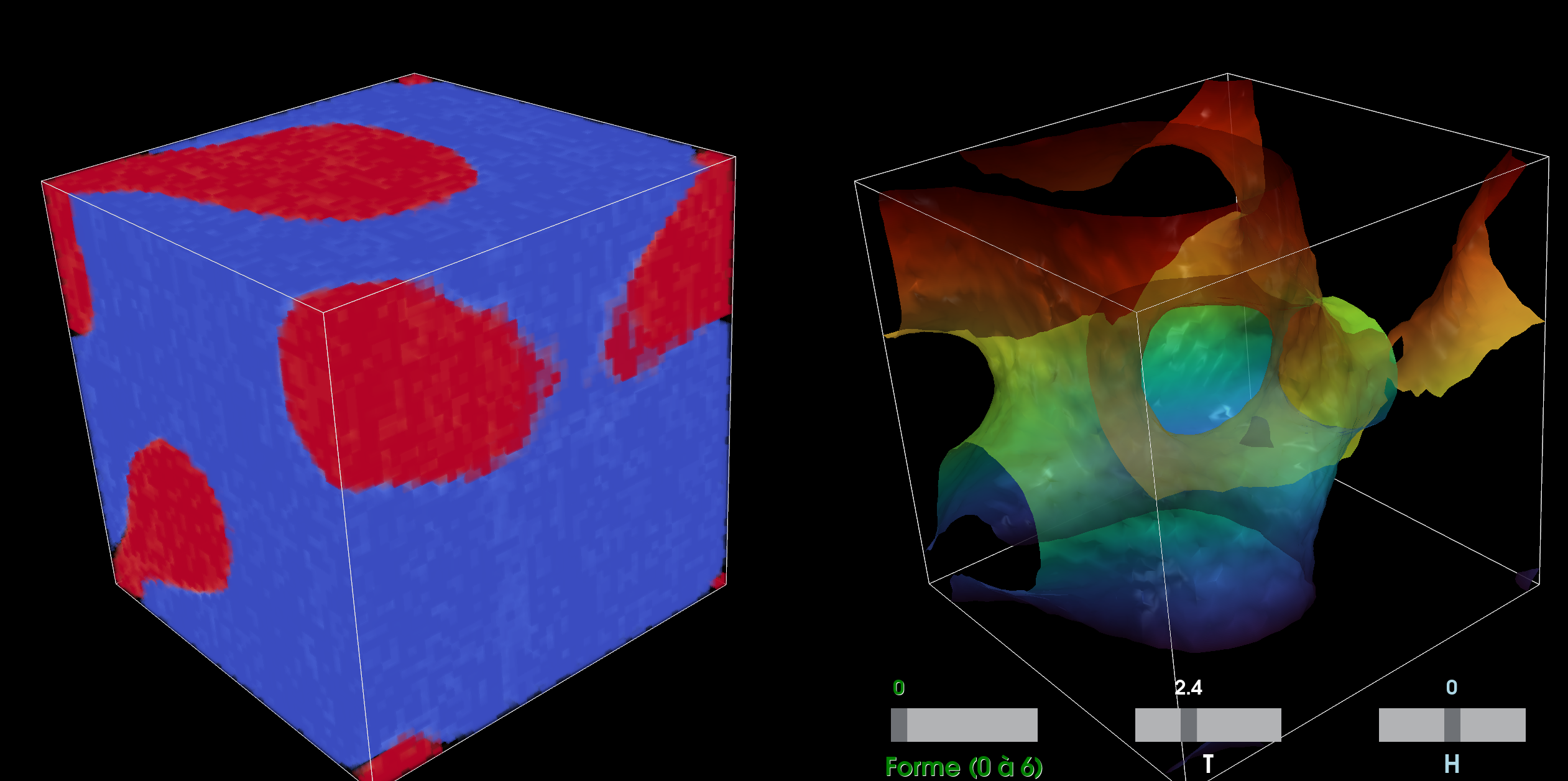
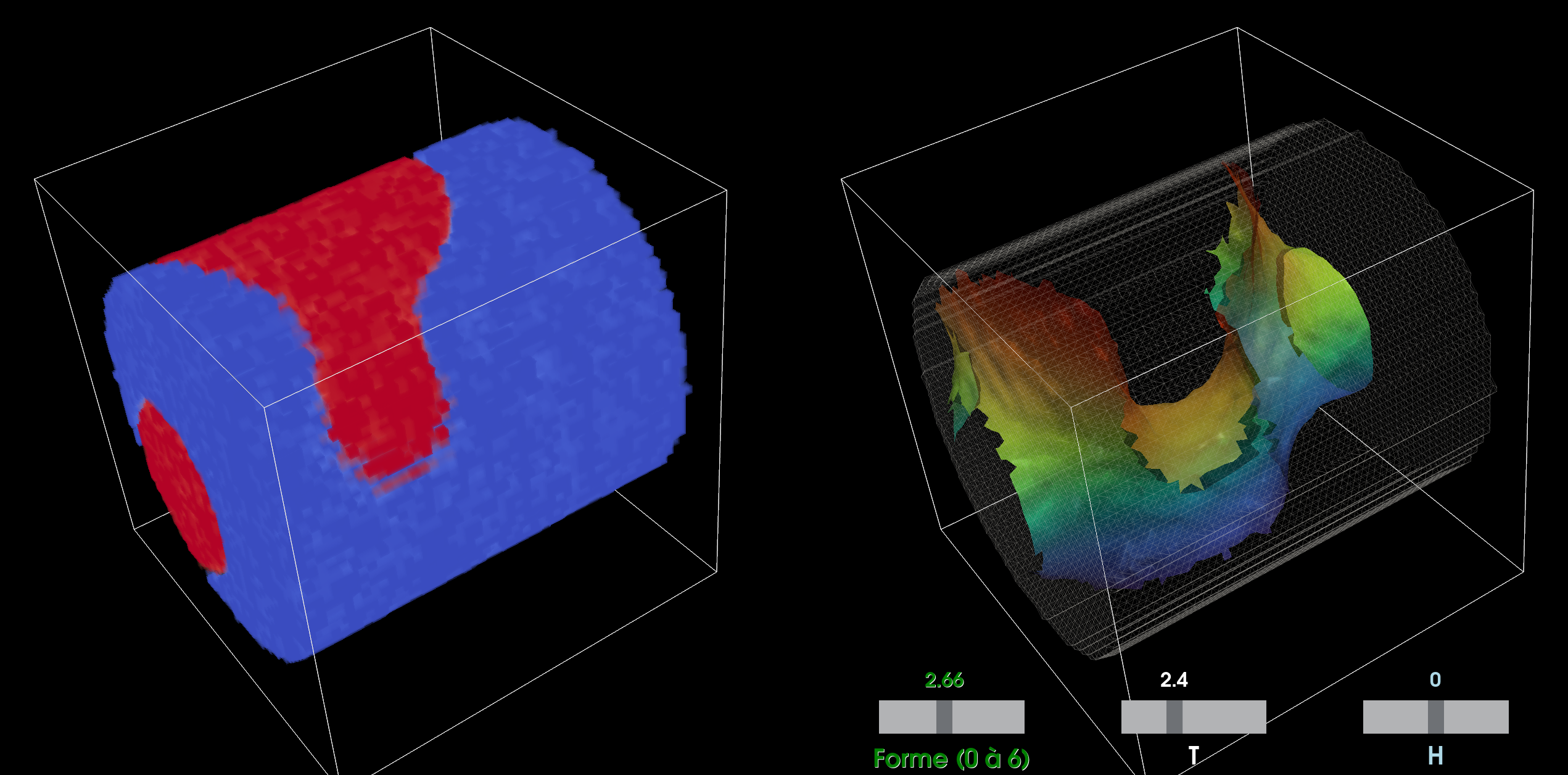
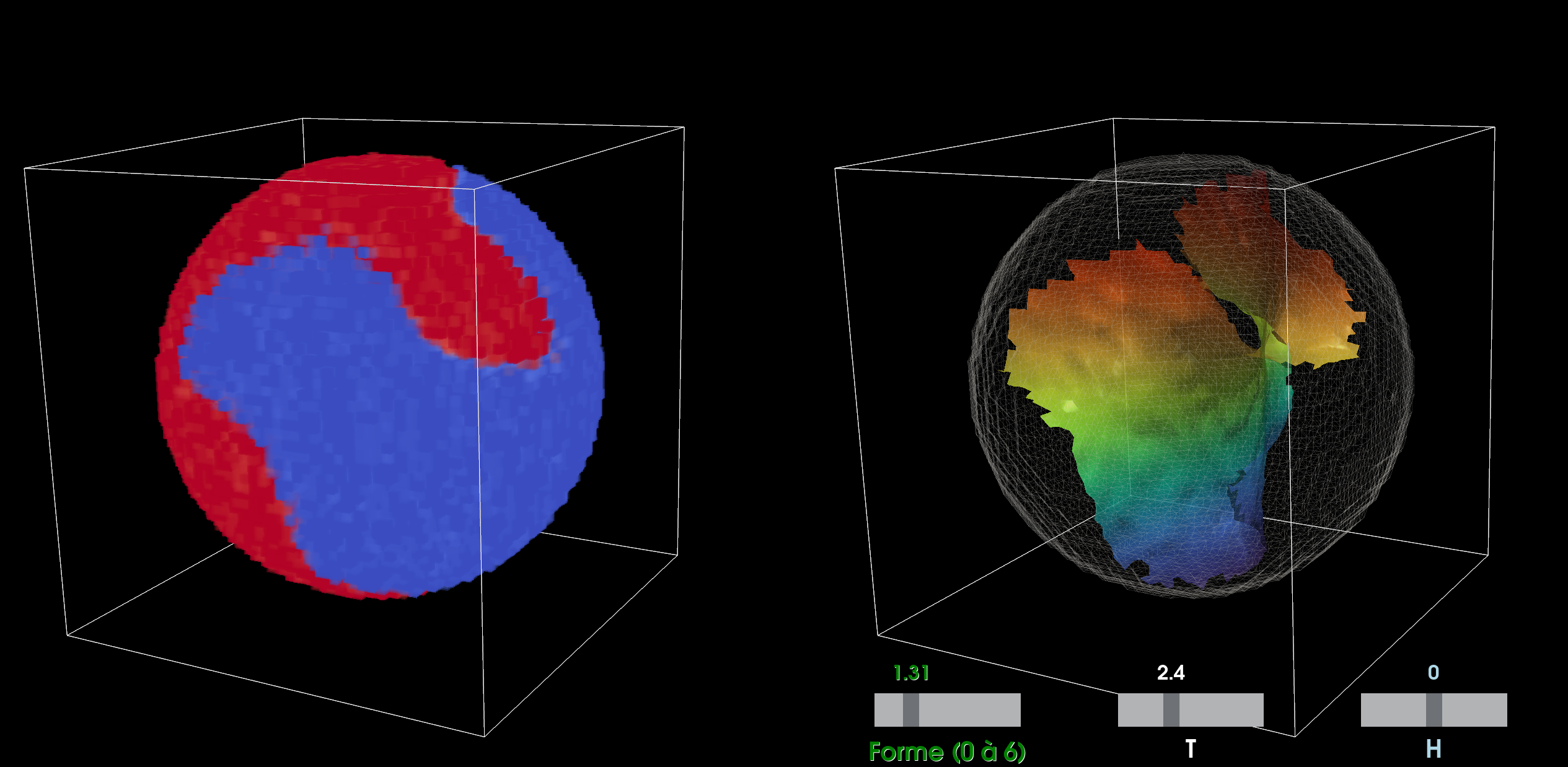
Real-time 3D Ising model simulation and visualization with PyVista. Manipulate temperature and magnetic field in real-time and observe phase transitions at 60+ FPS.
- Bit-packing: 64 spins per
uint64_t— 64M total spins - Software binary adder: computes all 64 spin energies simultaneously via bitwise operations
- Checkerboard decomposition: deterministic red-black parallel updates
- 128M spins/sec on a single M1 core (11× over standard Metropolis)
| Implementation | Spins/sec | Speedup |
|---|---|---|
| Standard Metropolis | 11.7M | 1× |
| Optimized (bit-parallel) | 128.3M | 11× |
| OpenMP (8 cores, est.) | ~80M | ~7× |
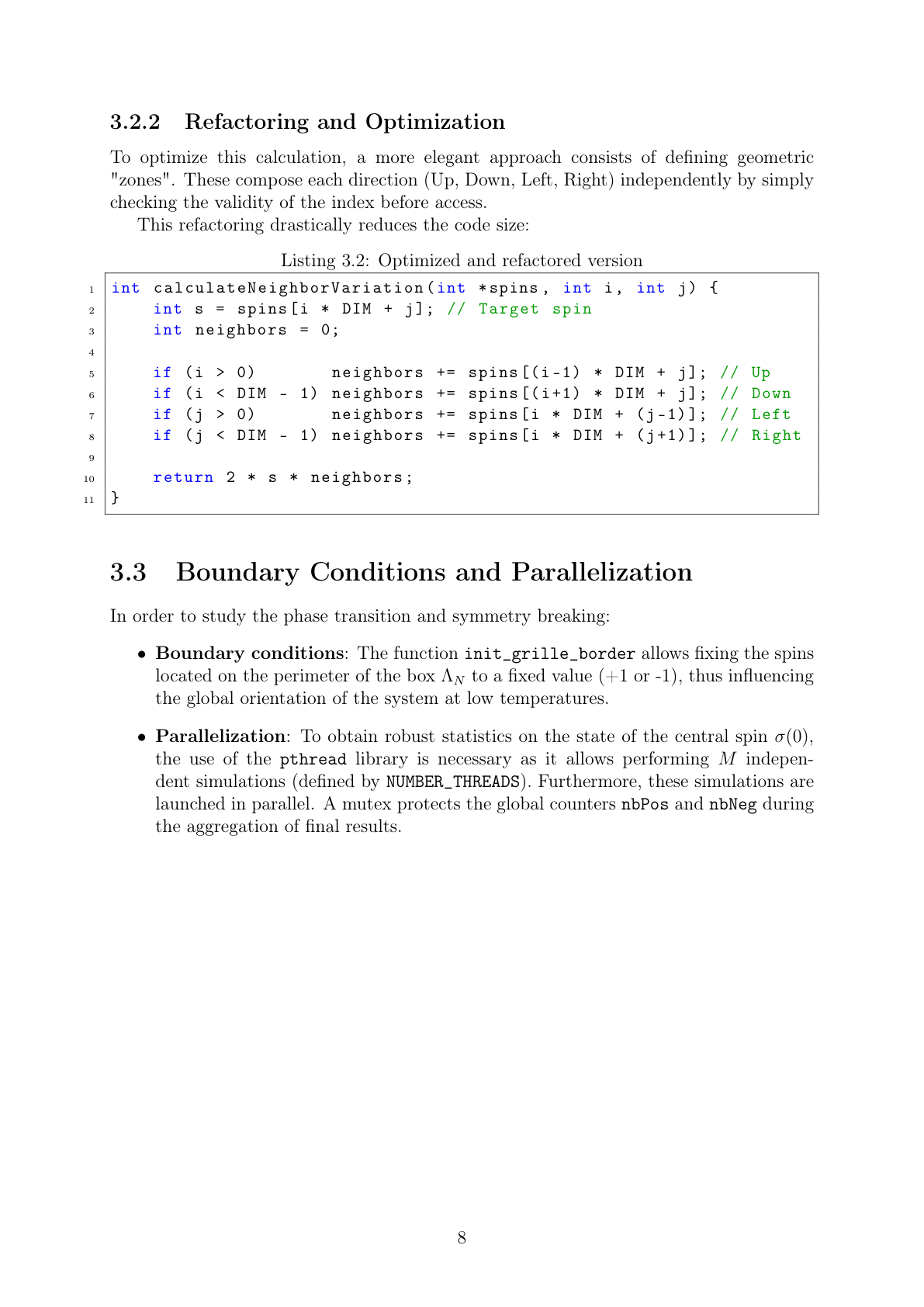
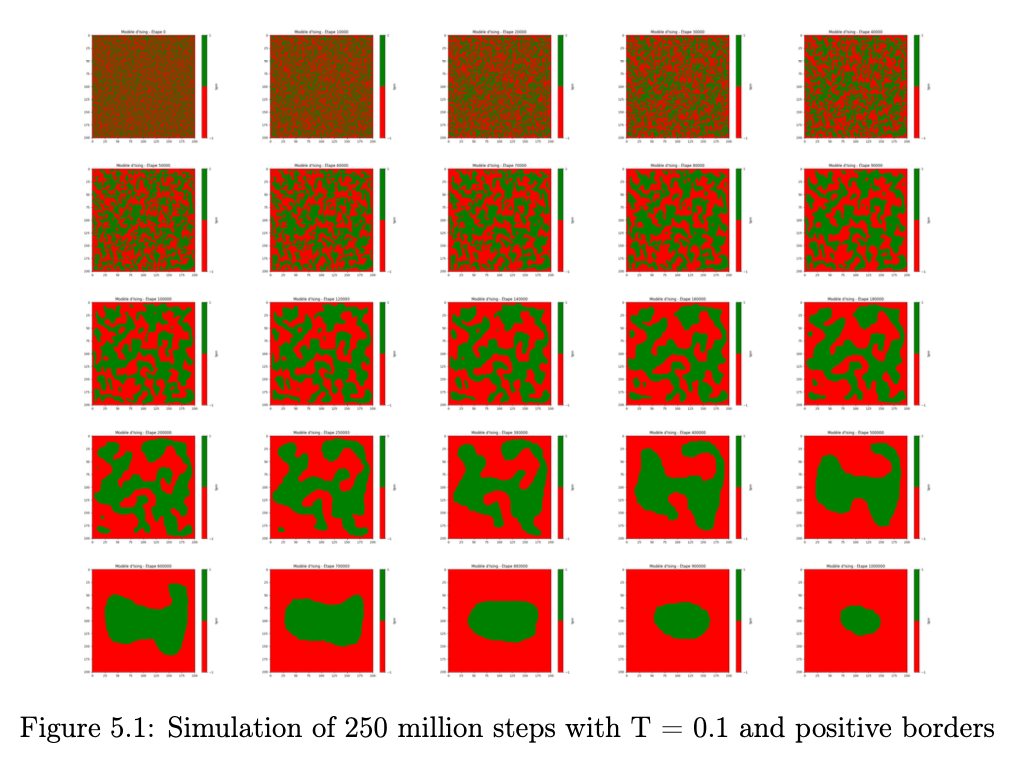
Numerical study of the phase transition in the 2D Ising model using the Metropolis-Hastings algorithm, implemented across three HPC approaches: single-threaded C (30M steps/sec), multi-threaded with pthreads (33M steps/sec), and CUDA GPU (~2B steps/sec). Validates Onsager's exact solution (
→ Ising-MCMC-HPC · Grade: 19/20
-
puiseux-differential-algebra— Puiseux solutions of AODEs via$x^a = t^b$ · CRIStAL
Transformer-Cuda-Framework— GPT from scratch in C++/CUDANeuralBitChess— Chess engine with NNUE + RL pipelineIsing-3D-Optimized— Real-time 3D Ising with bit-parallel HPCIsing-MCMC-HPC— 2D Ising: CPU vs pthreads vs CUDA · 19/20Derivative-LLM— Transformer trained to differentiate polynomialsDerivative-Agent— LLM-powered agent for math operations
PageRank— PageRank on real navigation data · 20/20cartPole— Deep Q-Network on custom environmentfinancial-stats— Moving average strategy analyzer · Live Demo
PhotoDetector— macOS desktop app for YOLOv8 object detectionProjet-Graphe— Maximum flow (Dinic algorithm) · 19.5/20school-dashboard— Gender salary gap visualization · 17.5/20Personal-Neovim— Modular Neovim configurationubersicht-widget-crypto— Real-time crypto prices on macOS desktop





- Portfolio: alexgit31.github.io/Portfolio
- LinkedIn: linkedin.com/in/alexis-evaristo
- Email: alexis.evaristo@polytech-lille.fr
- Location: Lille, France
Polytech Lille (graduating Aug 2027) · Erasmus @ Polimi (Sep 2026–Feb 2027)
Seeking a PhD starting September 2027 in AI, HPC, or applied mathematics.